Cal Poly's Astronauts

Victor Glover

As the engineering alumnus gets ready for a historic voyage beyond the moon, he shares how Learn by Doing prepared him to face the unknown.

By Larry Peña // Illustration by Kyleigh Pinto

Share this article:

Victor Glover in an orange space suit

TBD

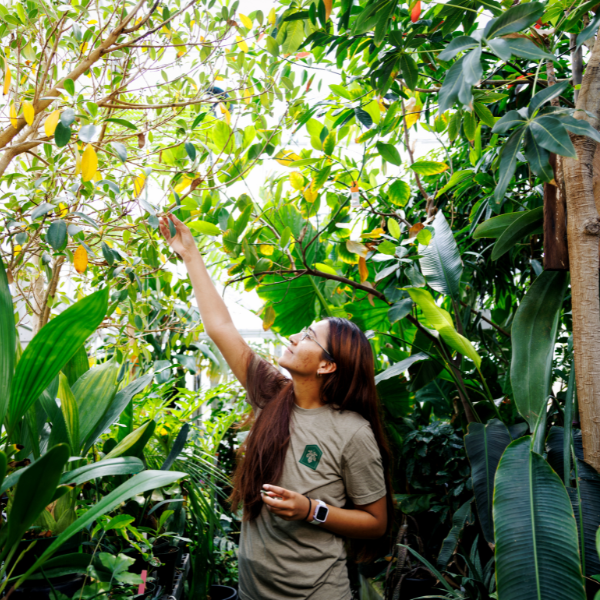
The conservatory builds on the legacy of beloved greenhouses instrumental in a Learn by Doing curriculum. The new high-tech structure contains three teaching greenhouses featuring distinct environments: canopy-covered lowland tropics, rain-soaked elevated tropics, and a parched desert. Each atmosphere is meant to be an abrupt contrast with the Central Coast’s Mediterranean climate.

Shelter co-manager Sam Rammetovac, an animal science student, comforts a lamb at the Cal Poly.

The experience of moving through the stifling heat and humidity — with a thriving spectrum of plants — was intentional. Professors Jenn Yost and Matt Ritter of the Biological Sciences Department aim to inspire a sense of awe and wonder among the more than 1,000 students who will explore the conservatory in their classes, labs and research projects every year.

A colorful illustration of NASA astronaut Victor GloverStudents can see black pepper, vanilla and coffee plants, plus carnivorous pitcher plants, rare cacti and some endangered species. Several faculty have even brought seeds back from their global travels, resulting in a range of species now rooted in the conservatory.
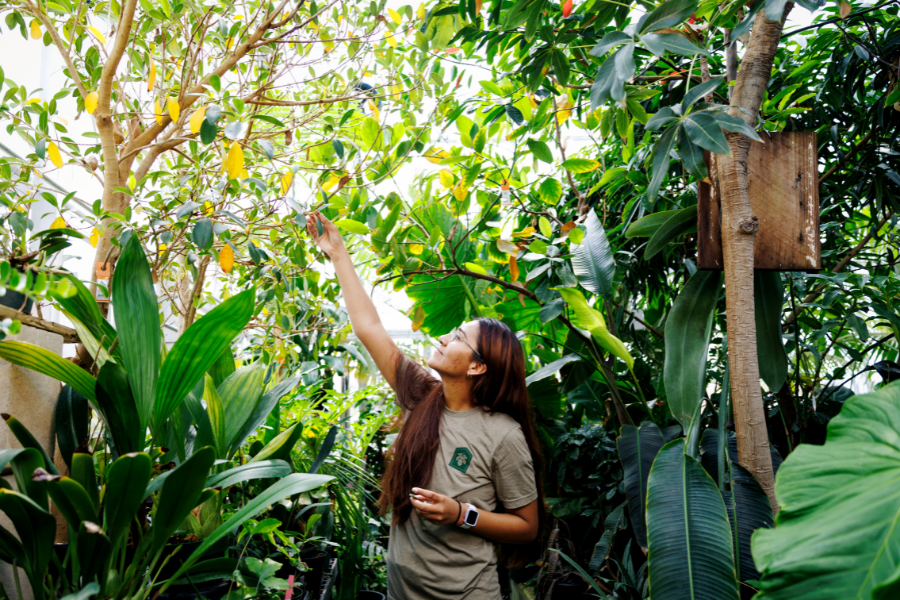
The experience of moving through the stifling heat and humidity — with a thriving spectrum of plants — was intentional. Professors Jenn Yost and Matt Ritter of the Biological Sciences Department aim to inspire a sense of awe and wonder among the more than 1,000 students who will explore the conservatory in their classes, labs and research projects every year.

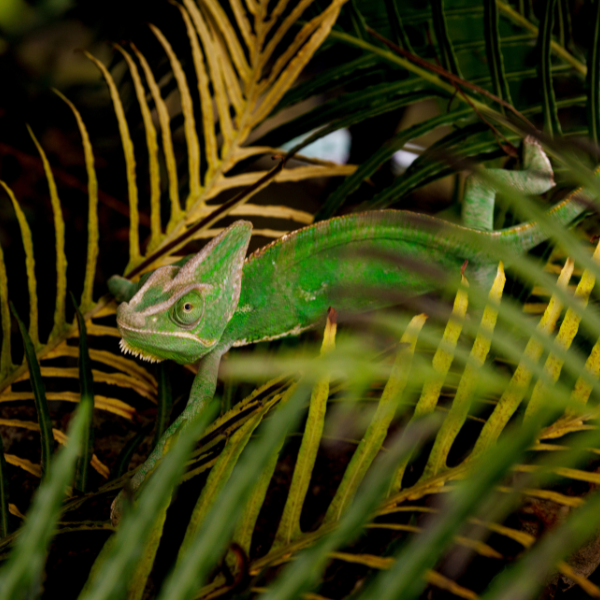
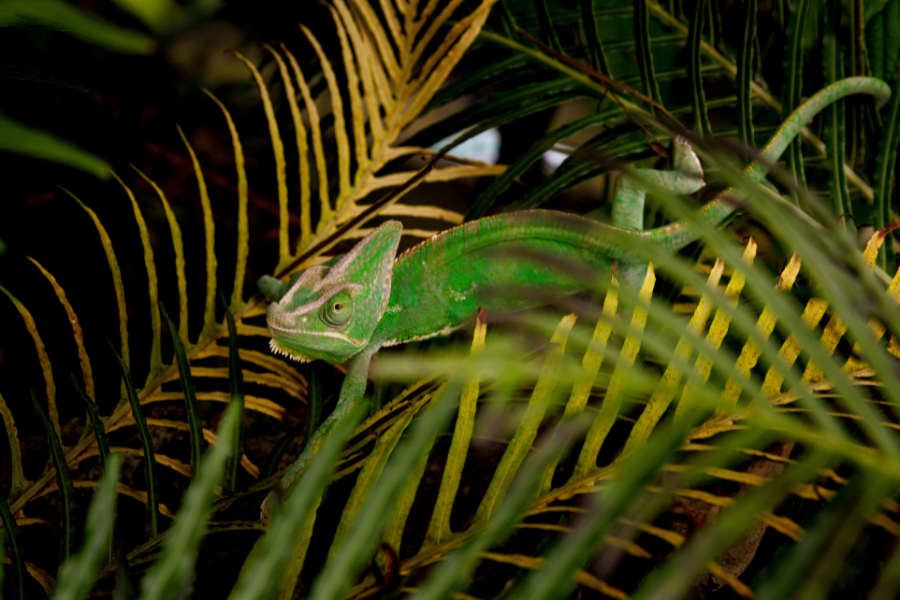
Students can see black pepper, vanilla and coffee plants, plus carnivorous pitcher plants, rare cacti and some endangered species. Several faculty have even brought seeds back from their global travels, resulting in a range of species now rooted in the conservatory.
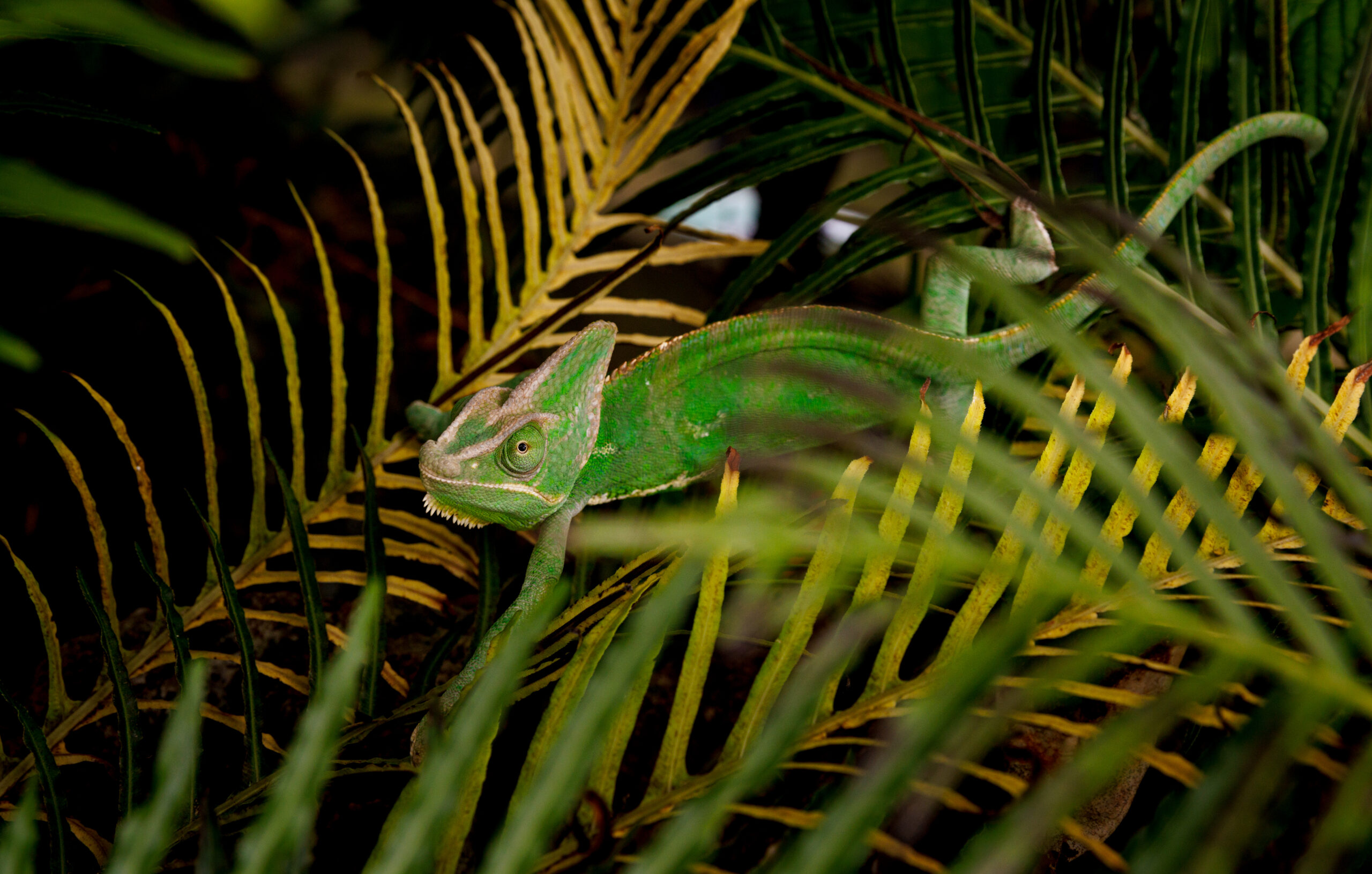
The experience of moving through the stifling heat and humidity — with a thriving spectrum of plants — was intentional. Professors Jenn Yost and Matt Ritter of the Biological Sciences Department aim to inspire a sense of awe and wonder among the more than 1,000 students who will explore the conservatory in their classes, labs and research projects every year.

Students can see black pepper, vanilla and coffee plants, plus carnivorous pitcher plants, rare cacti and some endangered species. Several faculty have even brought seeds back from their global travels, resulting in a range of species now rooted in the conservatory.
Lorem ipsum dolor sit amet, consectetur adipiscing elit. Ut elit tellus, luctus nec ullamcorper mattis, pulvinar dapibus leo.Lorem ipsum dolor sit amet consectetur adipiscing elit dolor

The experience of moving through the stifling heat and humidity — with a thriving spectrum of plants — was intentional. Professors Jenn Yost and Matt Ritter of the Biological Sciences Department aim to inspire a sense of awe and wonder among the more than 1,000 students who will explore the conservatory in their classes, labs and research projects every year.

Students can see black pepper, vanilla and coffee plants, plus carnivorous pitcher plants, rare cacti and some endangered species. Several faculty have even brought seeds back from their global travels, resulting in a range of species now rooted in the conservatory.

Full Width Gallery

Shelter co-manager Sam Rammetovac, an animal science student, comforts a lamb at the Cal Poly Three Bags Full Program’s on-campus shelter in early March. Shelter co-manager Sam Rammetovac, an animal science student.

Inline Gallery

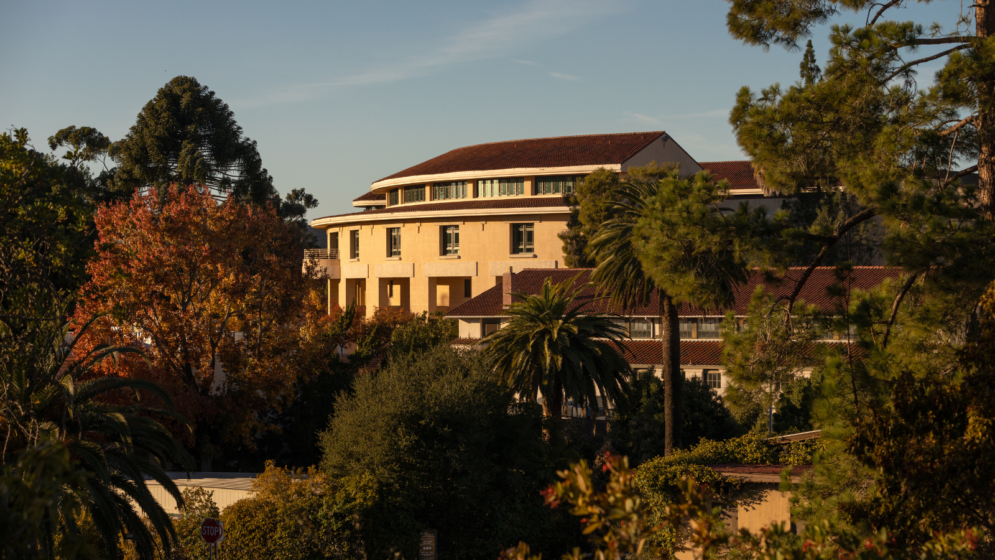
Cal Poly's business building amidst trees

Shelter co-manager Sam Rammetovac, an animal science student, comforts a lamb at the Cal Poly Three Bags Full Program’s on-campus shelter in early March. Shelter co-manager Sam Rammetovac, an animal science student.

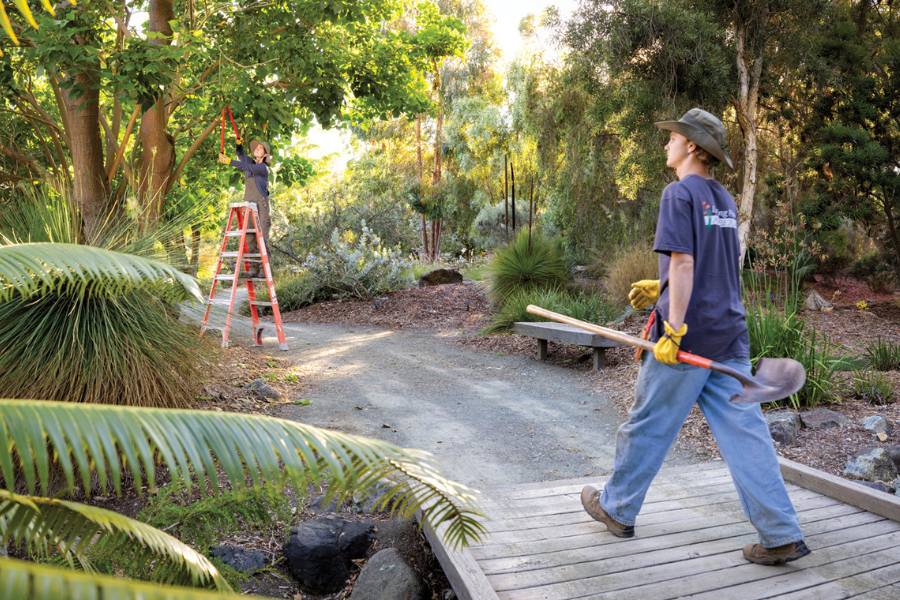
Every plant is thoughtfully maintained by conservator and curator Gage Willey and a team of skilled interns. Willey teaches students to care for each species while physically constructing parts of the greenhouse. Seeing plants grow in the soil, the instructors say, helps students understand how plants work in an evolutionary context.

“The conservatory provides this opportunity for students to actually feel with their hands, to smell with their noses, to see with their eyes all that plants are doing,” says Jenn Yost, botany professor and director of the Hoover Herbarium.

Every plant is thoughtfully maintained by conservator and curator Gage Willey and a team of skilled interns. Willey teaches students to care for each species while physically constructing parts of the greenhouse. Seeing plants grow in the soil, the instructors say, helps students understand how plants work in an evolutionary context.

“The conservatory provides this opportunity for students to actually feel with their hands, to smell with their noses, to see with their eyes all that plants are doing,” says Jenn Yost, botany professor and director of the Hoover Herbarium.

NOTE: For the image below, image needs to be set at: Content > Image Resolution > Full

An illustration of astronaut Victor Glover in an orange space suit carrying a helmet

Full Width Gallery 2 Images - Caption Below

Shelter co-manager Sam Rammetovac, an animal science student, comforts a lamb at the Cal Poly Three Bags Full Program’s on-campus shelter in early March. Each atmosphere is meant to be an abrupt contrast with the Central Coast’s Mediterranean climate. 

Every plant is thoughtfully maintained by conservator and curator Gage Willey and a team of skilled interns. Willey teaches students to care for each species while physically constructing parts of the greenhouse. Seeing plants grow in the soil, the instructors say, helps students understand how plants work in an evolutionary context.

“The conservatory provides this opportunity for students to actually feel with their hands, to smell with their noses, to see with their eyes all that plants are doing,” says Jenn Yost, botany professor and director of the Hoover Herbarium.

Inline Gallery 2 Images - Caption Below with photo credit

Shelter co-manager Sam Rammetovac, an animal science student, comforts a lamb at the Cal Poly Three Bags Full Program’s in early March. 

Joe Johnston

Full Width Gallery 3 Images - Caption Below with photo credit

LEFT: Shelter co-manager Sam Rammetovac, an animal science student, comforts a lamb at the Cal Poly Three Bags Full Program’s in early March. MIDDLE: Shelter co-manager Sam Rammetovac, an animal science student, comforts a lamb at the Cal Poly Three Bags Full Program’s in early March. RIGHT:

Joe Johnston

Sleepwalking Into Our Future

Every plant is thoughtfully maintained by conservator and curator Gage Willey and a team of skilled interns. Willey teaches students to care for each species while physically constructing parts of the greenhouse. Seeing plants grow in the soil, the instructors say, helps students understand how plants work in an evolutionary context.

“The conservatory provides this opportunity for students to actually feel with their hands, to smell with their noses, to see with their eyes all that plants are doing,” says Jenn Yost, botany professor and director of the Hoover Herbarium.

Sleepwalking Into Our Future

Every plant is thoughtfully maintained by conservator and curator Gage Willey and a team of skilled interns. Willey teaches students to care for each species while physically constructing parts of the greenhouse. Seeing plants grow in the soil, the instructors say, helps students understand how plants work in an evolutionary context.

“The conservatory provides this opportunity for students to actually feel with their hands, to smell with their noses, to see with their eyes all that plants are doing,” says Jenn Yost, botany professor and director of the Hoover Herbarium.

Sleepwalking Into Our Future

Every plant is thoughtfully maintained by conservator and curator Gage Willey and a team of skilled interns. Willey teaches students to care for each species while physically constructing parts of the greenhouse. Seeing plants grow in the soil, the instructors say, helps students understand how plants work in an evolutionary context.

“The conservatory provides this opportunity for students to actually feel with their hands, to smell with their noses, to see with their eyes all that plants are doing,” says Jenn Yost, botany professor and director of the Hoover Herbarium.

Victor Glover:  At a Glance

〉Cal Poly Major General Engineering, 1999

〉Navy Captain and Former Fighter Pilot

〉1 Space Mission with NASA

⇒2020 | Piloted the first operational flight of the SpaceX Crew Dragon to the International Space Station

〉Total Time in Space: 167 days, 6 hours, 29 minutes

〉Slated to pilot the Artemis II mission to orbit the moon
Your Next Read

Digging Deeper

Lorem ipsum dolor sit amet, consectetur adipiscing elit. Ut elit tellus, luctus nec ullamcorper mattis, pulvinar dapibus leo.

Digging Deeper

Lorem ipsum dolor sit amet, consectetur adipiscing elit. Ut elit tellus, luctus nec ullamcorper mattis, pulvinar dapibus leo.

Fonts

H1 - Article Title - 65px - FreightTxtCmpPro - Normal - CP Green

H2 - Article Subtitle - 32px - FreightTxtCmpPro - Normal - CP Green
Subheader within article

H3 - Eyebrow - 18PX - source sans pro - SemiBold - CP Green
Eyebrow

H4 - Header 20PX - Source Sans Pro - Semibold - CP Green
Subheader within article

H5 - HEADER - 16px - Source Sans Pro - SEMIBOLD - Seal Grey
Photo credit

Summary - Lede In - 22PX - Source Sans Pro - Light - Seal Grey
Lede In

Paragraph. 22px – Source Sans Pro.  Seal Grey

Link – Seal Grey, underlined

Byline - 16px - Source Sans Pro - Normal - Seal Grey

Caption - 16px - Source Sans Pro - Semibold - Seal Grey

Another Header Option

Add Your Heading Text Here

This Is a Title

Lorem ipsum dolor sit amet, consectetur adipiscing elit. Ut elit tellus, luctus nec ullamcorper mattis, pulvinar dapibus leo.

Another Header Option

Add Your Heading Text Here

This Is a Title

Lorem ipsum dolor sit amet, consectetur adipiscing elit. Ut elit tellus, luctus nec ullamcorper mattis, pulvinar dapibus leo.