About Campus
History on Display
A research team’s heartfelt historical exhibit tells the story of a Japanese American family who farmed the Central Coast.
By Robyn Kontra Tanner
Photos by Dylan Head and Jay Thompson
Share this article:
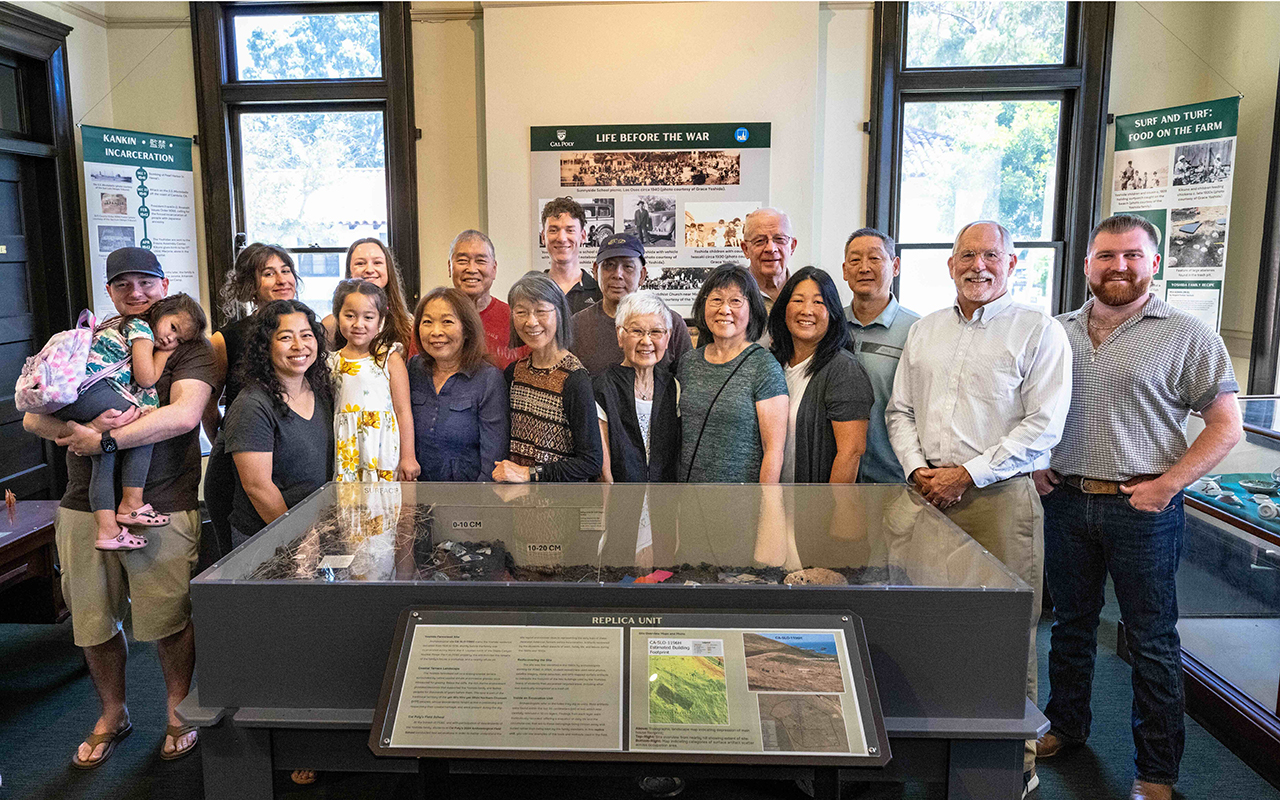
Members of the Yoshida family joined Cal Poly students and faculty at the grand opening of their historical exhibit in May of 2025.
Photo by Jay Thompson.
Photo by Jay Thompson.
In May 2025, a team of anthropology and geography students celebrated the culmination of a yearlong Learn by Doing experience. They debuted an immersive exhibit, titled “A Dream Interrupted,” at the SLO History Center that told the story of a Japanese American family of tenant farmers who lived on the Pecho Coast before World War II and the forced incarceration of Japanese people in the United States.
Students Annie Pagel, Emma Bowman, Lacey May, Collin Marfia and Jesse Horsley led a senior project to curate the historical exhibit and tell the story of the Yoshida family, who lived on and farmed the land, which is now owned by PG&E. Guided by professor Terry Jones, each student worked on the project from the very beginning, including a once-in-a-lifetime archaeological excavation in 2024 and months meticulously cleaning and cataloging thousands of artifacts in 2025.
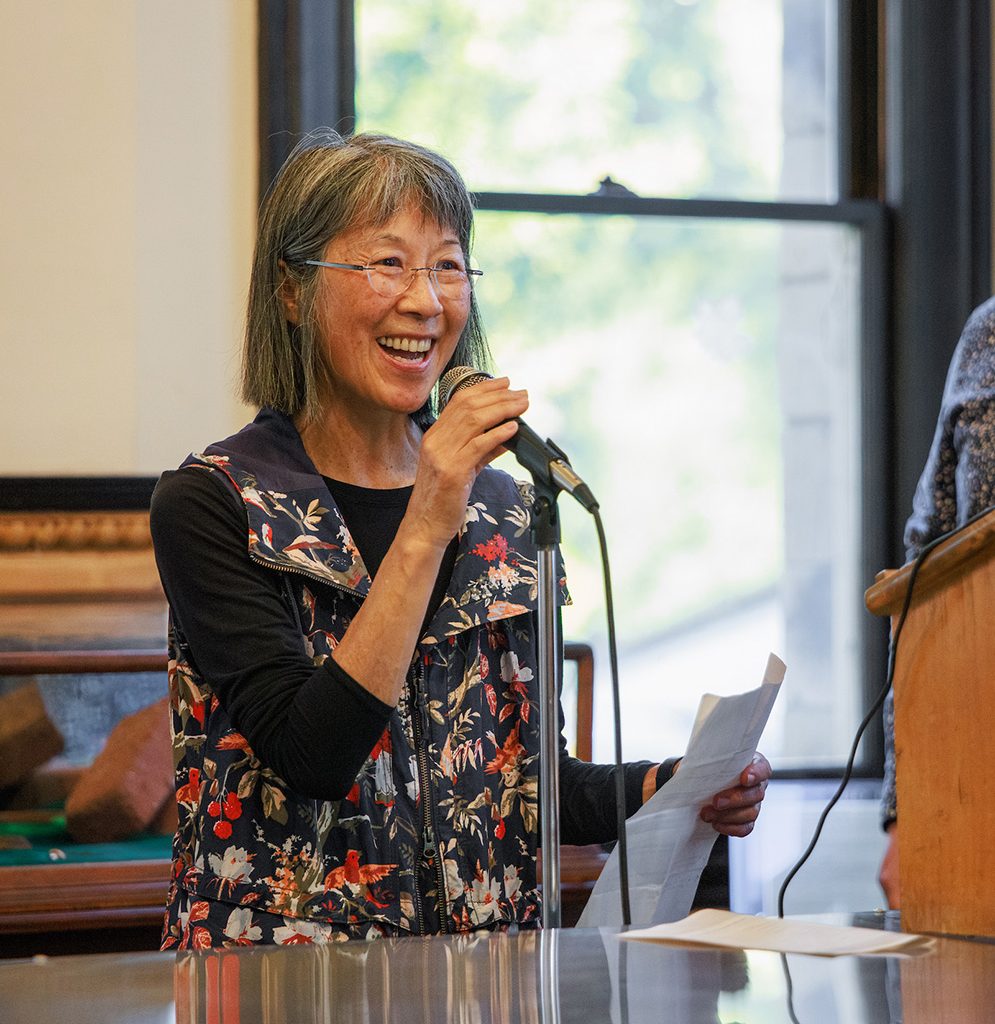
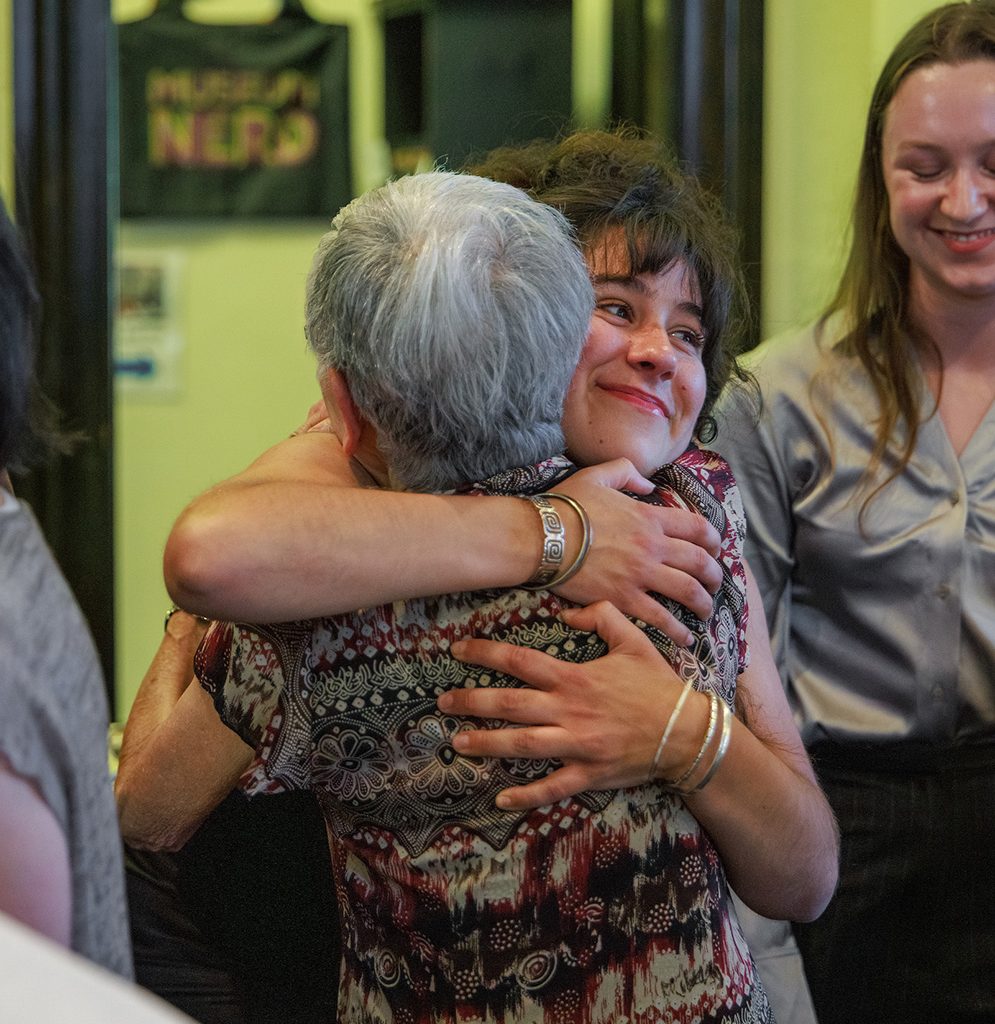
First image: Irene Yoshida speaks to attendees at the historical exhibit. Second image: Students and Yoshida family members embrace at the event.
Putting the Pieces Together
Students also connected with descendants of the Yoshida family members who lived on the farmstead: gathering family photos, oral histories and other details that enriched their understanding of a time that hasn’t been studied extensively until now.
The project was more complex than a typical senior project, said Bowman, and required the team to research and contextualize their findings for a cohesive public display.
“Managing all of those moving parts, including the physical evidence, written records, and interviews, was incredibly time-consuming,” said Bowman, who is pursuing a master’s degree in museum studies. “Lectures and textbooks can’t fully prepare you for the challenges and decisions that come with real-world application. It was a true Learn by Doing experience!”
The team chose 40 items that represented more than 800 artifacts, including massive red abalone shells, colorful dishware, animal bones, tools and children’s toys. The exhibit’s centerpiece was a replica of an excavation trench, where visitors could glimpse pieces of the past as they came out of the dirt. The display also included a station where visitors could fold origami paper cranes and add them to a collection symbolizing longevity.
Bowman said her team aimed to tell the story of a family who was forced off the land and the resilience they carried throughout their experience.
“Seeing everything assembled in one space created a tangible sense of connection to the community, the Yoshida family, and the history we were helping to share,” said Bowman. “I felt a lot of pride in what we accomplished.”
“To be perfectly honest, it couldn’t have gone any better,” said Jones of his students’ work. “I was absolutely overjoyed.”
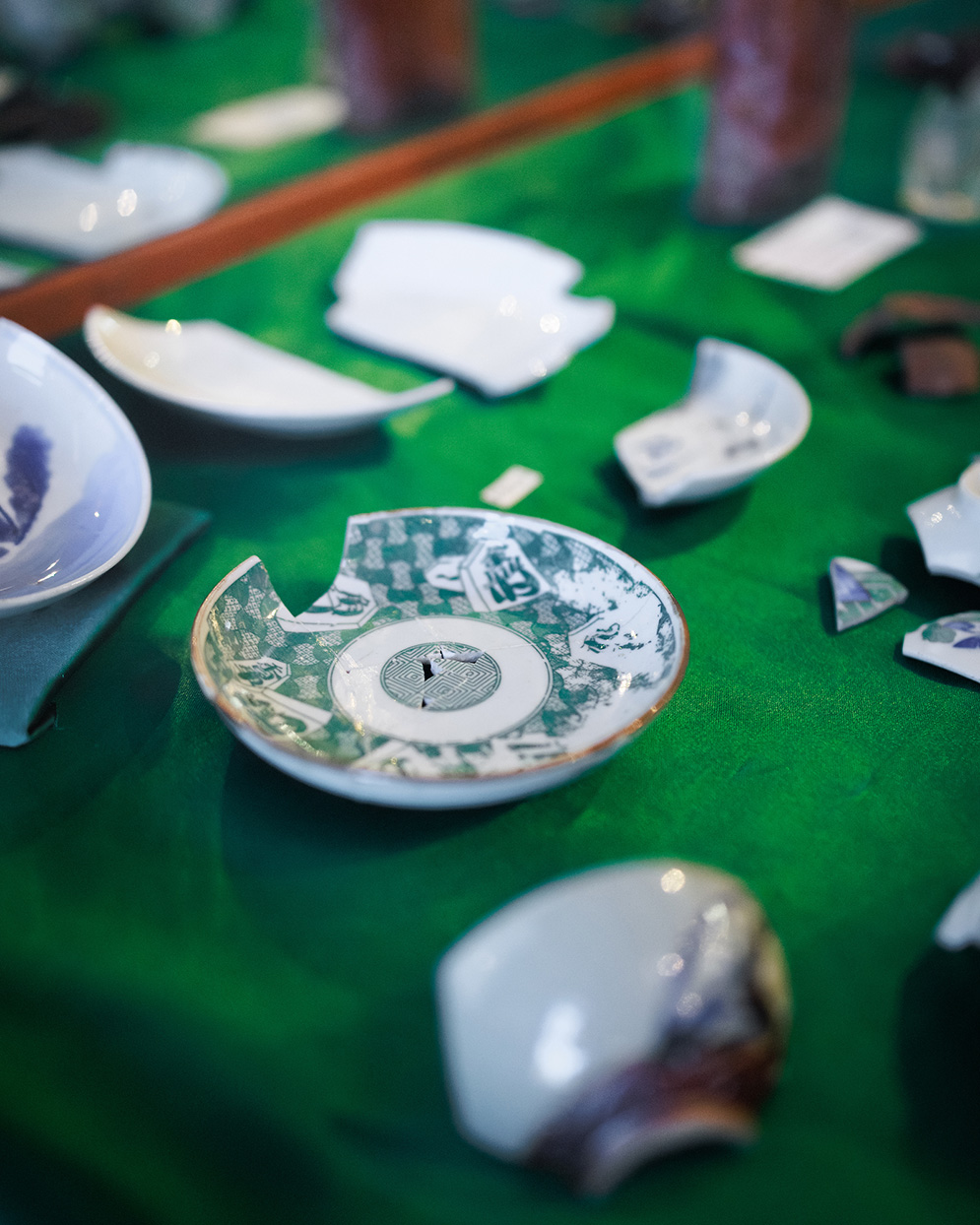
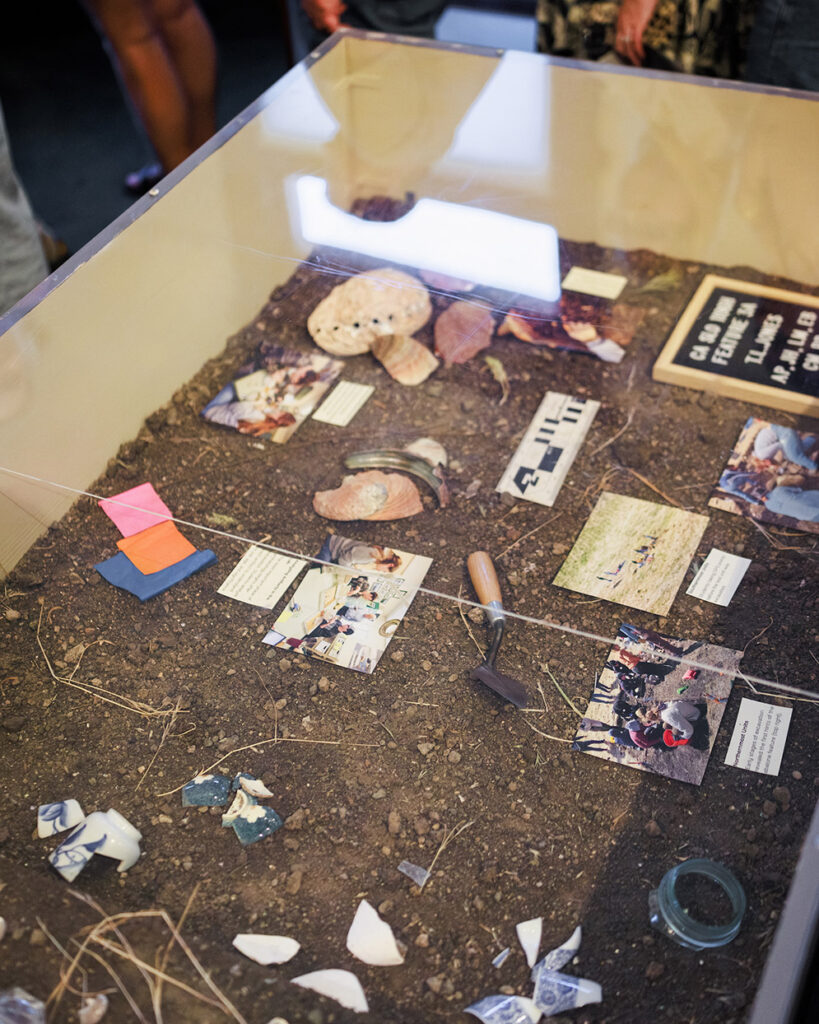
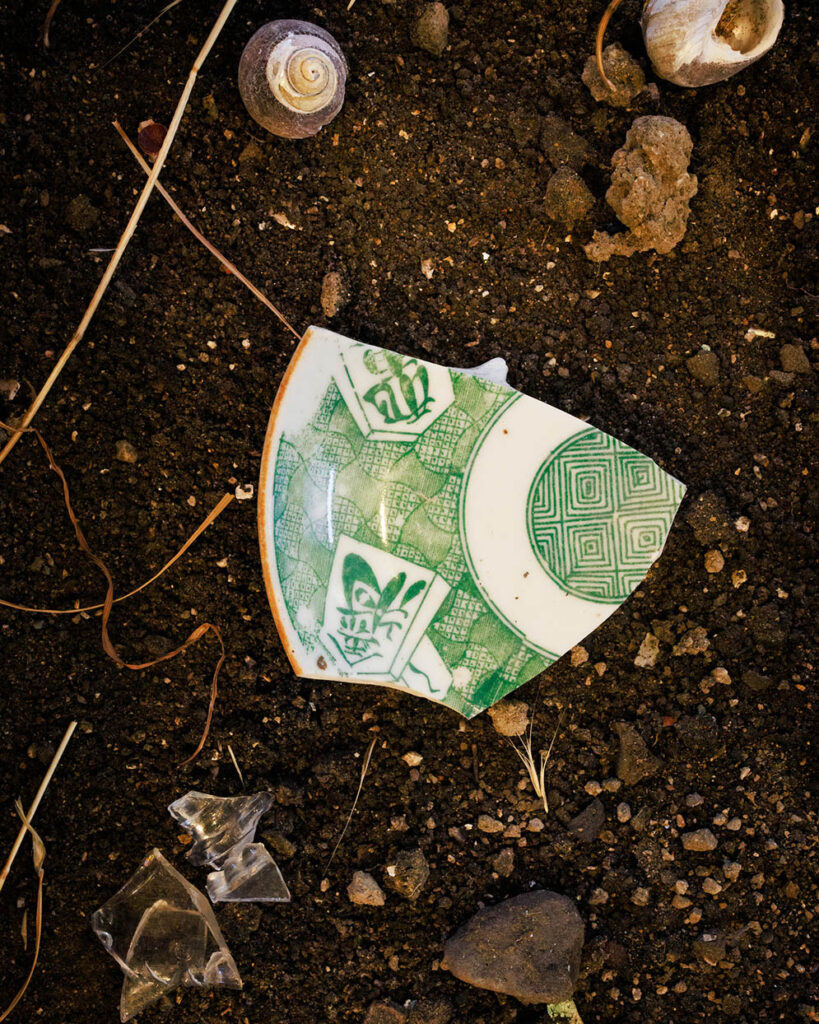
A variety of Japanese pottery fragments, tools, shells and other artifacts pulled from the soil that became part of the final display.
A Family Reunion
The night of the exhibit’s grand opening in May 2025 was one of excitement and emotion. Thirty-five members of the Yoshida family attended, in addition to members of the Cal Poly and San Luis Obispo communities.
“When we entered the exhibit, we immediately felt a flood of emotions — especially seeing my mom as a little girl in the family photo,” recalled Jay Suekawa, son of Sandra Yoshida Suekawa, the youngest child to live at the farmstead. “It felt special to experience our family history through the stories in the exhibit and various artifacts found at the dig. We appreciate Cal Poly for all they did to create such an amazing tribute through the exhibit.”
“I was so proud and excited to see the final exhibit! It made me feel closer to my Yoshida family and its roots that we heard about when we were growing up,” said Annette Kissinger, daughter of Byron Yoshida. “I felt like we were rock stars. We spoke with the students and Dr. Jones. I loved their passion for this project — it was as if they were members of our family. They were so friendly and eager to share their knowledge with us.”
Reflections From the Yoshida Family
“This experience — a look into the lives of Japanese first-generation immigrants through unearthing the actual soil where they lived — is something that will only be known to a few. The Yoshida Family is truly privileged to touch the roots 'from where they came'. All of the Japanese words of values came to life: 'gaman' (to persevere), 'shigata ga nai' (it cannot be helped), 'kodomo no tame ni' (for the sake of the children), 'okagesama de' (because of you-great grandfather, grandma, grandpa, uncles and aunties: I am). These are some of the first-generation values that came together in this place of beginnings. We are all culture bearers now due to this project. It is up to everyone to try to understand other cultures and embrace our differences. I don't think that people understand what a gem this project this was. Many thanks to Cal Poly and PG&E for their collaborative efforts and sharing this experience.”
Pam Yoshida
daughter of Masao Yoshida, the eldest child in the family
“Viewing the final exhibit was a surreal experience for me. Usually when visiting a museum exhibit you are expecting to learn about some long-ago civilization, or something of historical significance, instead I was getting to learn something about my own family. I was so honored to see the Yoshida family story told in such exacting and loving detail. My favorite artifact was actually the marbles that were found in the excavation site. It was nice to think of my rather stoic and quiet uncles playing marbles in the sand as 'kodomo' (children). It was nice to see items of 'real life' as a child living in a rural setting. It gave our family a sense of purpose when we gathered for the excavation to learn so much about a specific time period in our family's life.”
Linda Takahashi
daughter of Margaret Yoshida Takahashi
“The final exhibit this past May was both deeply historical and profoundly meaningful. My mother often told stories of how plentiful abalone once was along the Central Coast and how my grandfather and great-grandfather would gather them from the shore and rocks. She recalled the beautiful shells and how great grandfather would clean and then place them around the house. Seeing those shells rediscovered decades later felt like a quiet affirmation of her memories — proof that the lives once lived there continue to speak, even through the smallest of remnants.”
Randy Morin
daughter of Rose Yoshida Hisatomi
An Exhibit at Kennedy Library
What’s next for the artifacts? Another team of students will curate a display in Kennedy Library on campus as part of their senior project. Jones is also working on two pieces of peer-reviewed research coauthored by students who participated in the dig. Looking back, he said the arc of Learn by Doing opportunities over the last year was truly unique for everyone involved.
“I don’t think I’ve ever actually taken a project with students through all these phases,” Jones said. “I’ve taken all the steps myself as a professional, and I work with students on different aspects. But, in a 45-year career and 27 years at Cal Poly, this was the only project like this where we went from excavation to display.”
Your Next Read
A student manager at ASI Events talks about how she creates unforgettable experiences that make campus feel like home.
In a unique class last fall, a group of students worked with fire professionals to set a portion of university land ablaze.