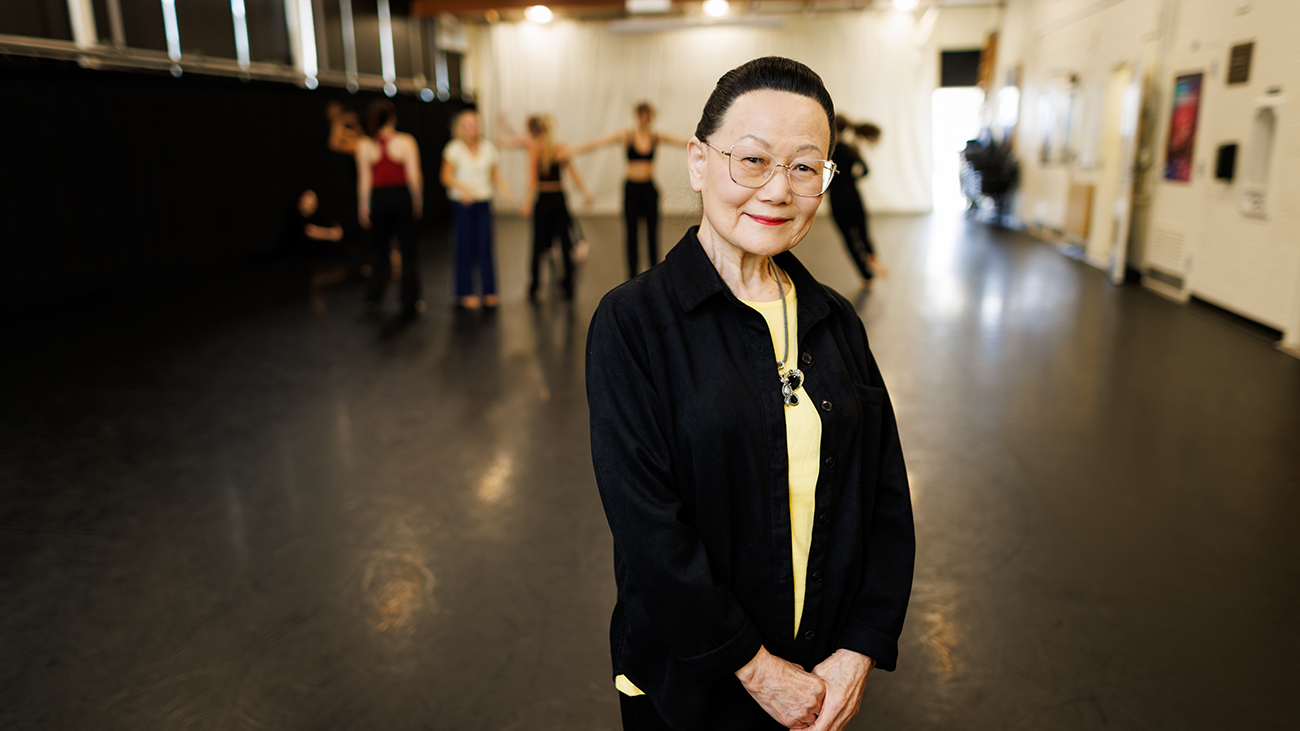
Professor Emeritus Moon Ja Minn Suhr attends a dance rehearsal in the studio named in her honor.
For decades, Cal Poly’s dance program has punched above its weight in terms of artistry and impact. Perhaps nowhere is that legacy more visible than in Orchesis Dance Company, the program’s premier performance ensemble.
And certainly no one has shaped both the program and the company more than Professor Emeritus Moon Ja Minn Suhr. For 31 years, from 1969 to 2000, she served as the founding director of Orchesis and revolutionized how dance was taught at Cal Poly.
With a formidable personality and an unwillingness to take no for an answer, Moon Ja — a tiny, cheerful and unstoppable woman who immigrated from Korea with limited English fluency — transformed dance education at Cal Poly from a handful of elective courses into a powerful Learn by Doing experience that has enriched the lives of thousands of Mustangs in motion.
Moon Ja Minn was born in China in 1940, to Korean parents who had relocated to pursue their studies. From an early age, Moon Ja was fascinated with learning and education. As early as 11, her dream was to become a college professor.
After living in Japan until 1945 and then returning to Korea, the family became refugees during the Korean War in 1950, but eventually were able to resettle in Seoul.
At the time, every level of Korean education required rigorous entrance exams to go on to the next step. A fiercely dedicated student, Moon Ja aced each test, giving her unlimited options of what she could study. Her original plan was to study and eventually teach medicine — but her father discouraged that path. It was her mother who suggested that she and her sisters pursue creative arts: her two sisters studied music and sculpture while Moon Ja focused her energy on dance.

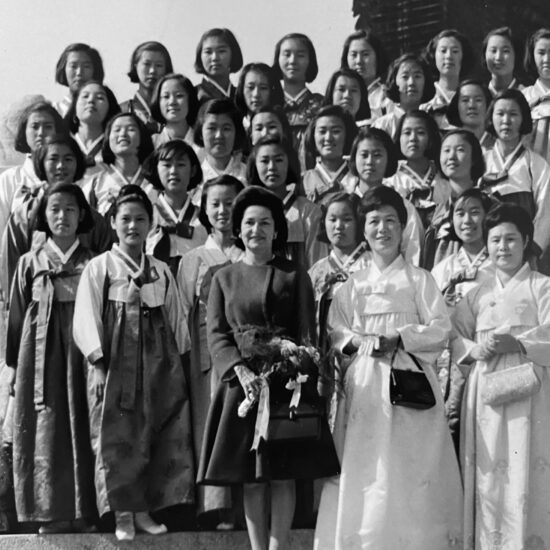
Moon Ja (second row, second from left) poses with her students for a photo with the visiting first lady of the United States, Lady Bird Johnson, and first lady of Korea, Young-soo Yuk (front center), 1963.
She studied dance at Ewha Women’s University in Seoul, then spent four years teaching in secondary schools. But she still dreamed of teaching at the university level, and for that she knew she needed more advanced studies.
Despite already being fluent in Korean and knowing Chinese and Japanese, she desperately wanted to learn English as well, and set her sights on graduate studies in the United States.
The visa committee at the U.S. consulate doubted that she could get a meaningful education in the U.S. without speaking English. But at her hearing, she was insistent.
“I try to study English here in Korea, but I conclude that in order to study English you need to be in an English-speaking country,” she told the committee, whose members didn’t speak Korean, through an interpreter. “Once I am admitted there, I know I’ll make it. If you can see my willpower, please issue me a visa.”
It worked. After a few English courses at a junior college in Southern California, Moon Ja applied to graduate dance programs, including a particularly promising one at the University of Northern Colorado. The admissions committee was skeptical that she would do well with her still-limited English skills — even suggesting she consider an undergraduate degree instead. But once again, Moon Ja persevered and entered the program.
Once I am admitted there, I know I’ll make it. If you can see my willpower, please issue me a visa.
Moon Ja Minn, at her visa hearing, 1963
Many classes were doable, but some language-heavy classes, like Kinesiology, History of Dance and Philosophy of Dance proved challenging.
Moon Ja met a fellow former teacher in her class and asked her for help with her studies. After one study session at Barbara’s studio apartment, Moon Ja began showing up unannounced for more impromptu lessons.
“The second time, she opened the door and said, ‘Oh, it’s you again,’” she said. “When she went to bed and I was still studying, I would go study in her bathroom or her closet so I wouldn’t disturb her with the light. I think she was impressed with my stubbornness, because she eventually started being very kind to me.”
With the help of Barbara — who became a lifelong friend — and a demanding study schedule that left little time for anything else, Moon Ja aced her dance studies and became more fluent in English. A few days before graduation, the dean of her college offered her a full-time teaching job. Her dream of being a college professor was within her grasp.
“I told him, ‘I’m overwhelmed — it feels like a triumph just to be offered,’” she said. “But I’ve only slept three and a half hours per night since I’ve been here. If I take this job and stay here, I think the sleep ghost will haunt me. I have to go somewhere else.”
She applied for teaching jobs at more than 30 schools from the West Coast to the Midwest, with her most promising offers coming from UC Davis and Cal Poly. The deciding factor: San Luis Obispo was closer to Los Angeles International Airport, which offered her a shorter flight home to Seoul, where a job offer was waiting at her alma mater.
Moon Ja directs a rehearsal, 1981. Photo courtesy of University Archives.
When Moon Ja arrived at Cal Poly in 1969, dance was part of the physical education program — not its own area of study. There were only three half-credit activity dance courses at Cal Poly, and only one three-unit class designed to actually teach dance.
That approach didn’t work for Moon Ja, who had just completed advanced studies in dance theory, philosophy, performance and technique. She needed to get students to think about dance as a serious art form, not just another exercise class. But how?
“I needed to propose new dance courses. I needed to establish a course focused on dance performance. And I needed to increase the credit values of the dance courses,” she said.
She started by establishing a performance course, and volunteered to teach a new dance session on Tuesday and Thursday evenings that fall.
“When I met the students who signed up for the class that first Tuesday, I told them, ‘It’s so wonderful to see you all — but this class is leading to a performance. If you’re just here to take an activity, you might want to reconsider,’” she said. “‘But if you want to take it seriously, you should stay.’”
With that, Cal Poly’s first dance ensemble performance was underway. She booked a campus auditorium for six months later — setting an ambitious deadline and sparking excitement for first-time dancers.

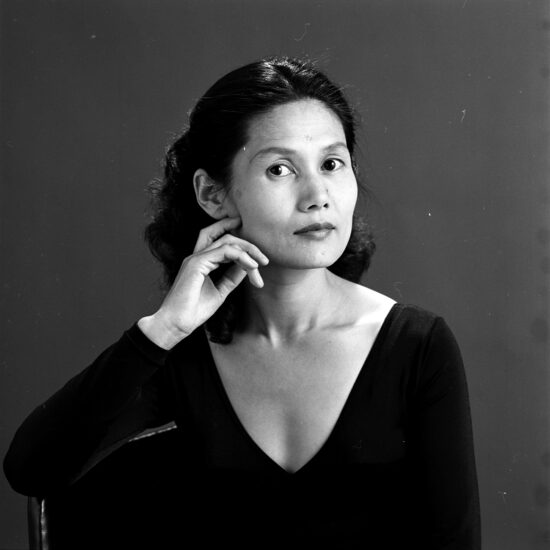
A Cal Poly faculty portrait of Moon Ja, 1981. Photo courtesy of University Archives.
With no department budget for a performance, she put $200 of her own money toward costumes, printed programs and other supplies. Eventually she convinced the department to supplement the budget with an additional $50.
With limited resources, Moon Ja’s new husband, Paul Suhr, jumped in to assist, helping to select music and recording rehearsals and performances.
When that first class of dancers took the stage for the first Orchesis performance at the Cal Poly Theater (now known as Spanos Theatre), then-President Robert E. Kennedy was in the audience. After the show, Moon Ja says, he urged her to continue, telling her that the theater had never before been used so beautifully.
As Orchesis continued into its second year, Moon Ja still hadn’t been able to convince her colleagues in the Women’s Physical Education Department to take dance seriously. To get some buy-in, she announced at a department faculty meeting that she was inviting them to participate in the upcoming show as performers.
They laughed her off, but when she brought it up again the following week — more assertively — a few colleagues volunteered on the condition that they could wear masks during their dance piece so as not to embarrass themselves in front of their students. Within a few weeks of rehearsal, they started to realize that they had underestimated what it takes to perform.
“One by one, they all came up to me and said, ‘I didn’t realize dance took this much time and precision to prepare!’”
The faculty piece was a hit with the students, and the following year more colleagues approached Moon Ja to ask if they could repeat their performance.
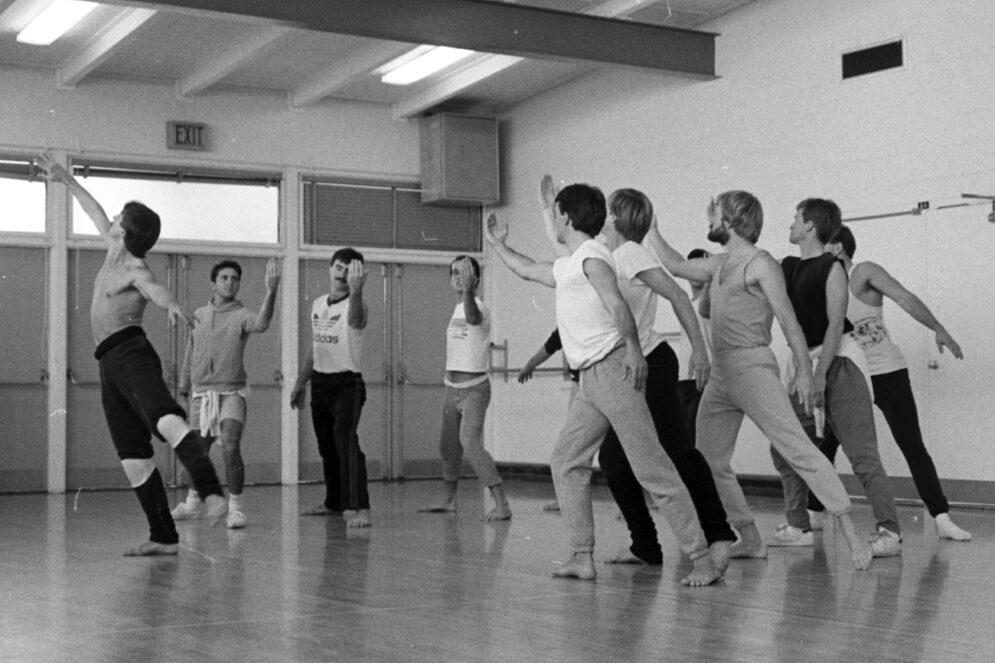
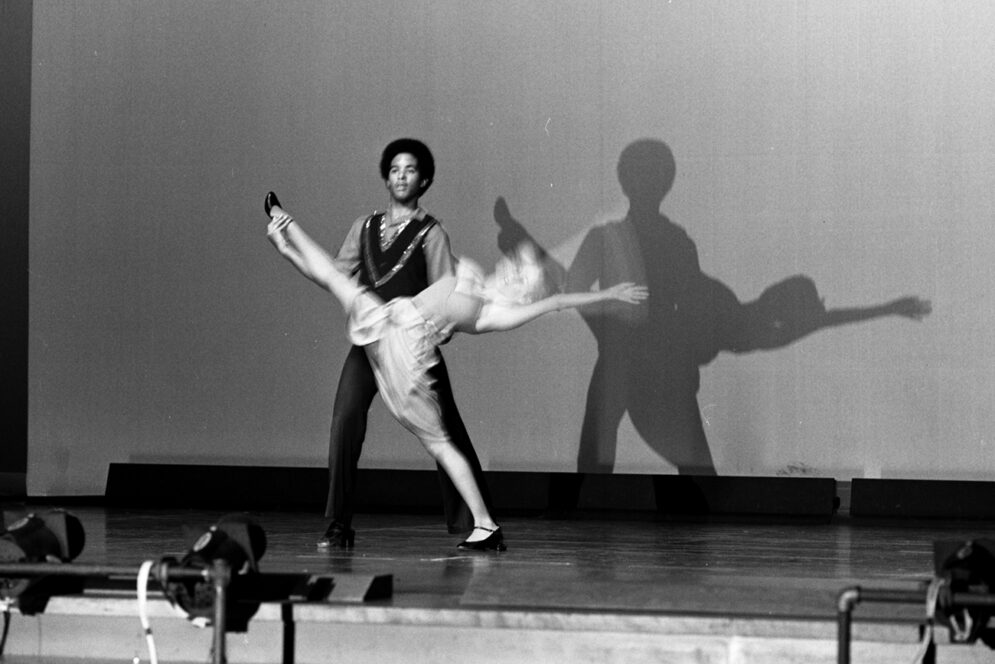
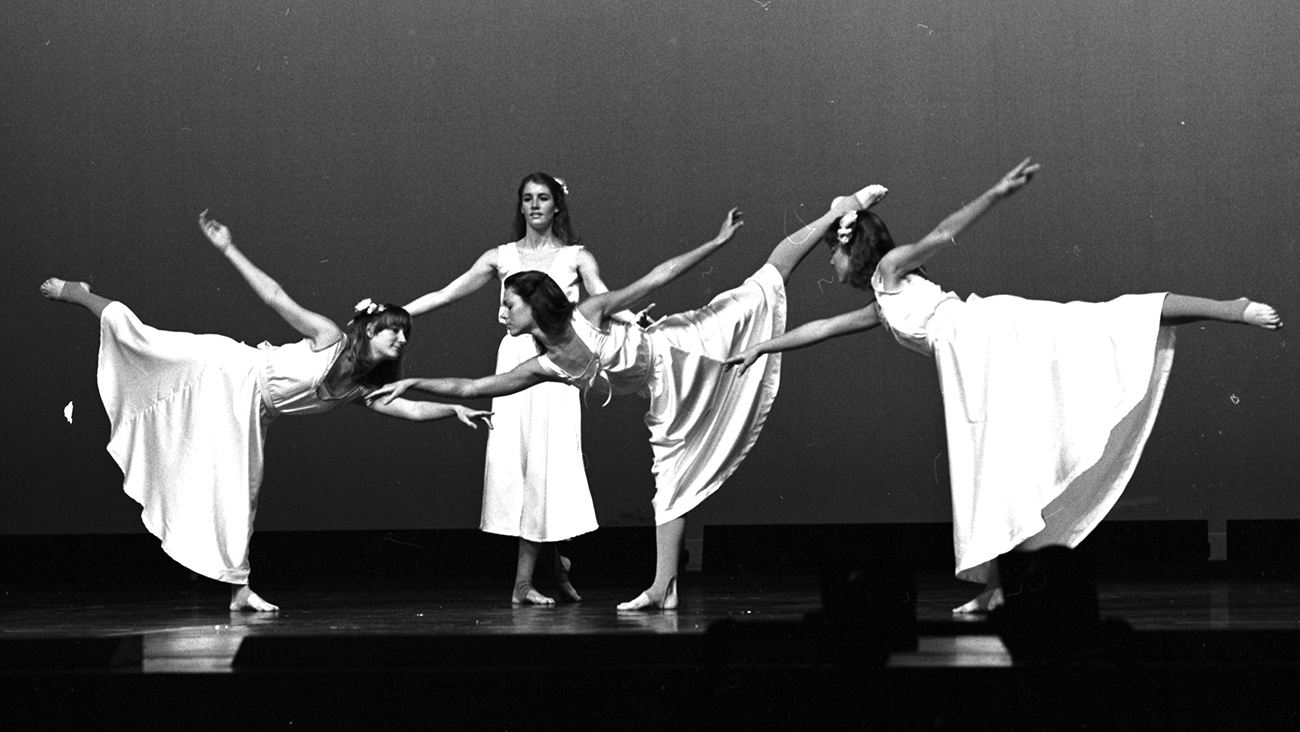
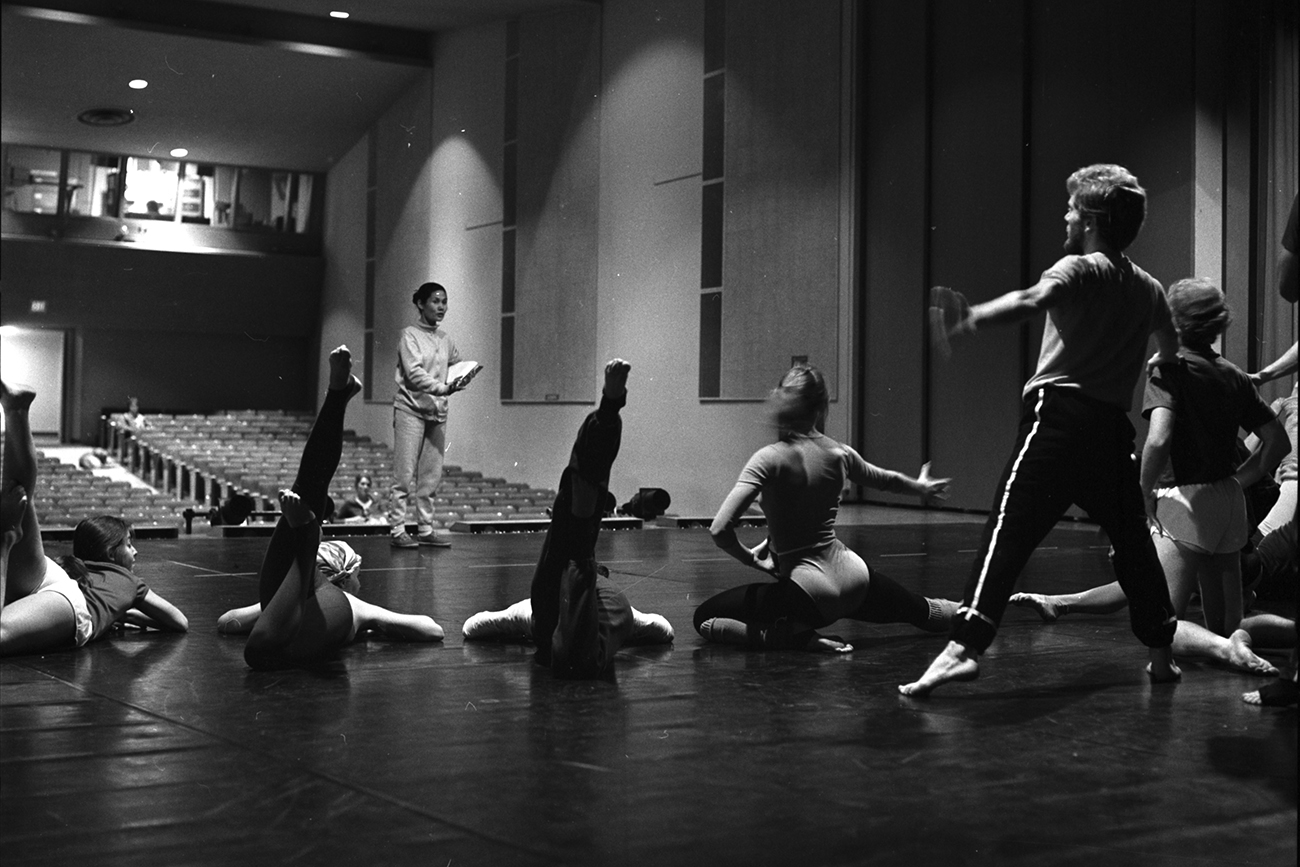
First photo: A group of dancers rehearsing, 1983. Second photo: A couple performs a dance at the Cal Poly Theater, 1981. Third photo: An Orchesis performance, 1981. Photos courtesy of University Archives.
After a decade, Moon Ja was still the only dance instructor on campus, despite doubling the number of dance courses. The department was able to hire a part-time instructor, but badly needed another full-time faculty member.
In a meeting about the future of the program in 1982, Moon Ja recalls new university president Warren J. Baker asking where else in the university she thought dance might fit. “I told him, ‘I don’t care if you put us in the Animal Science Department,’” she said. “‘As long as dance gets a fair shot.’”
One proposal at the time included a plan to keep dance activity classes in the P.E. Department, while moving the lecture and theory classes elsewhere. At a meeting to discuss the plan, Moon Ja stood up and refused. “If dance were a person, you couldn’t cut off the head and leave the body behind — it would destroy the whole program!”
Over the next few years, she earned a doctorate in dance at Texas Woman’s University and was promoted from associate to full professor. She established 20 new classes and launched dance as a minor, and brought on another full-time and part-time instructor.
A university reorganization merged dance with theatre to form a new academic department focused on performing arts in the new School of Liberal Arts.
I don’t care if you put us in the Animal Science Department, as long as dance gets a fair shot.
Moon Ja to President Warren J. Baker, 1982
Orchesis grew as well. In 2000, she directed her last show, Dance Legacy, featuring 19 individual dances choreographed by dance faculty, students and local guest artists.
At 60, she performed a piece called “The Whale Song V” alongside other members of the Orchesis family.
Moon Ja may have started Orchesis with $200 of her own money, but when she handed over the reigns to dance professor Maria Junco that year, she left the new director a budget of nearly $90,000 in university and community funding.
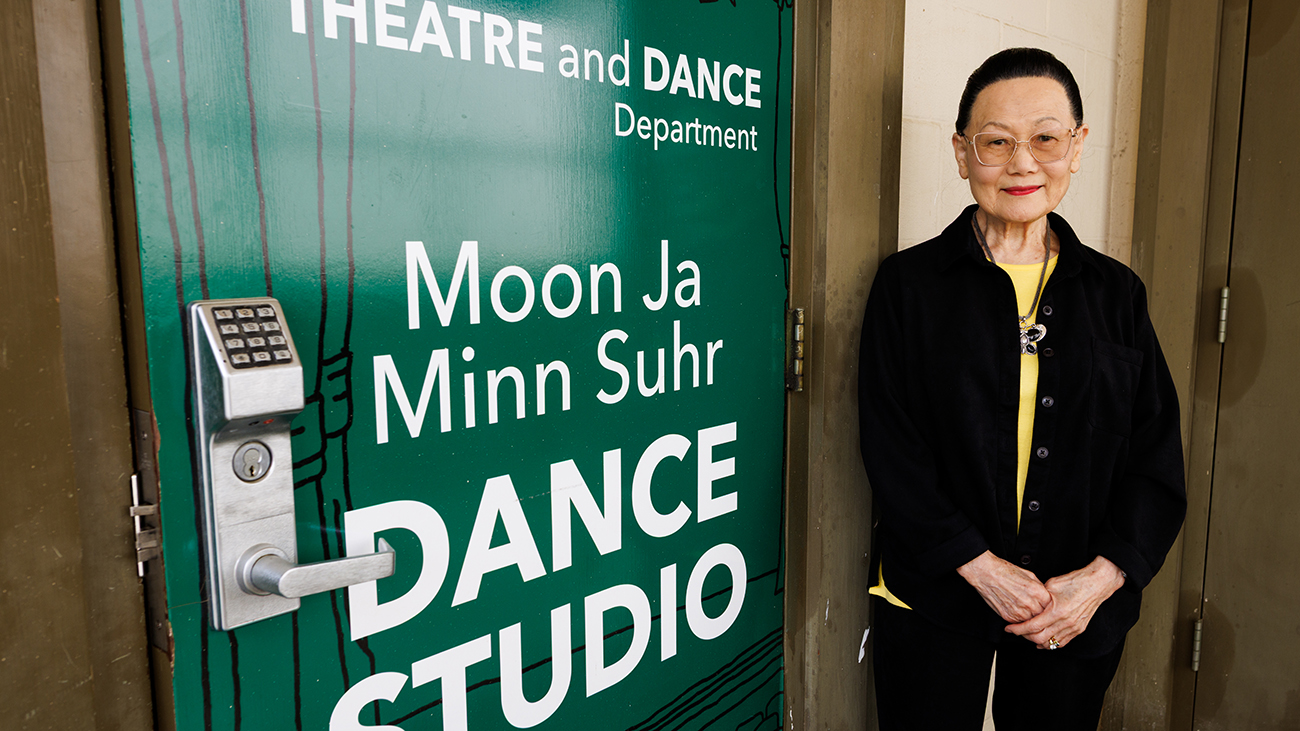
In 2001, Junco initiated a rededication that officially renamed the program’s class and rehearsal space in Crandall Gymnasium: the Moon Ja Minn Suhr Dance Studio.
“Moon Ja was really the one who insisted on the scholarship of dance in a polytechnic school,” said Diana Stanton, who directed Orchesis and led the dance program from 2009-2014 and 2021-2025. “She had the courage and the fortitude to set that tone. Those of us that have succeeded her have really tried to keep elevating that level of artistic and academic scholarship.”
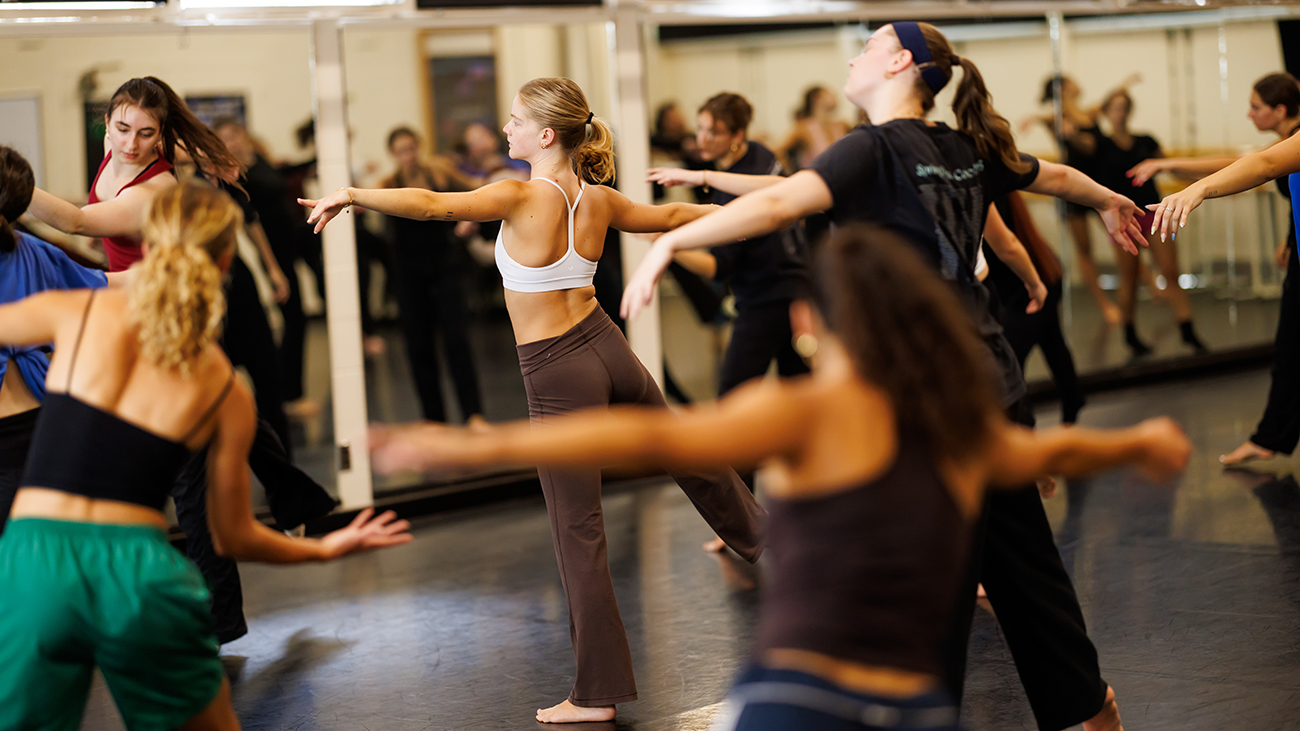
Dance students rehearse for the department’s 2026 spring performance.
From Moon Ja’s very first class to today, Learn by Doing has been baked into the dance curriculum at Cal Poly.
“There’s no other way for us to teach what we teach,” said Leann Alduenda, current director of the dance program and Orchesis Dance Company. “Even in my general education Dance Appreciation class, I tell students, ‘I know that you came here thinking you’re in a lecture course. But you are going to get up and you’re going to move because you can’t learn about dance unless you do it.’”
Today Orchesis features approximately 35 dancers per year, who must each audition for their place in the company and commit to six hours of rehearsal time per week. Orchesis members aren’t required to be part of the dance minor and can come from any major on campus.
The focal point of the year is the company’s annual winter dance performance. Under the guidance of professors, students manage many key elements of the event — from exhaustive biweekly dance rehearsals to choreographing sections of the performance, to logistics and marketing. This year the Orchesis student leaders come from a wide variety of major areas including computer science, nutrition, public health, political science and art and graphic design.
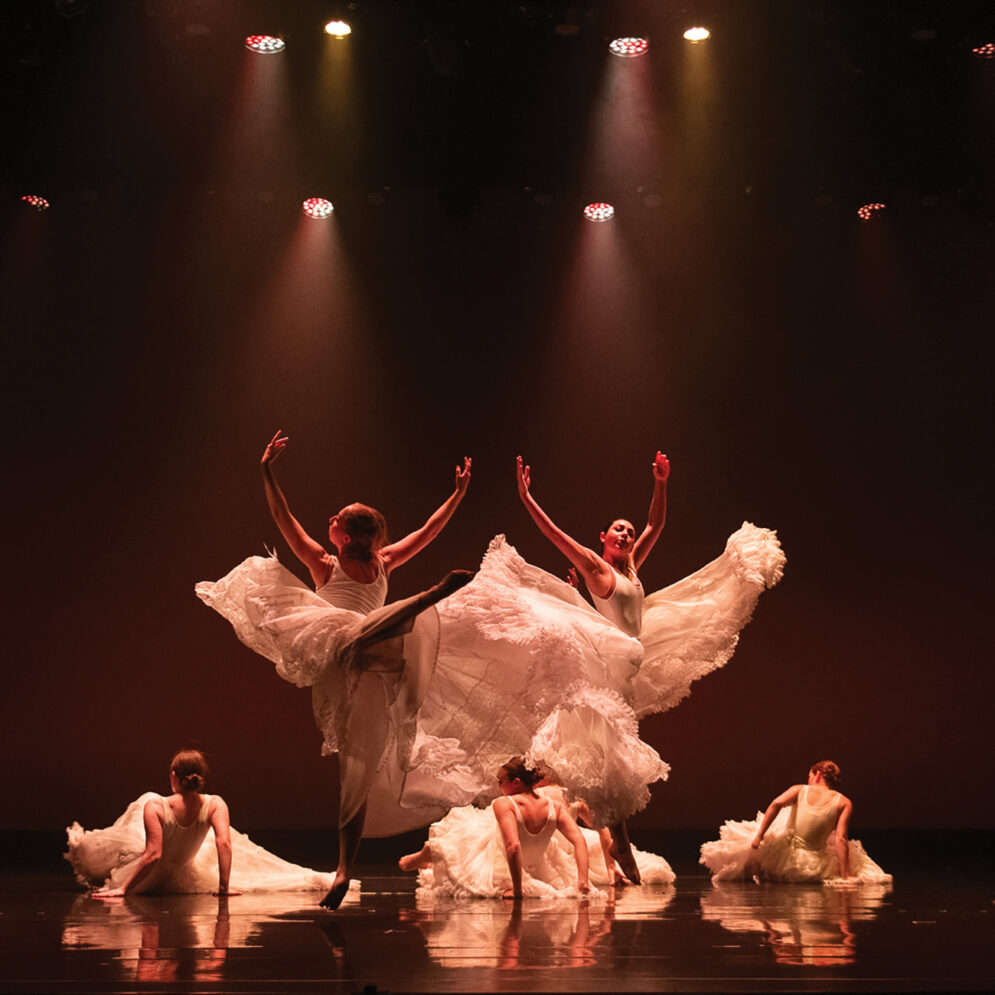
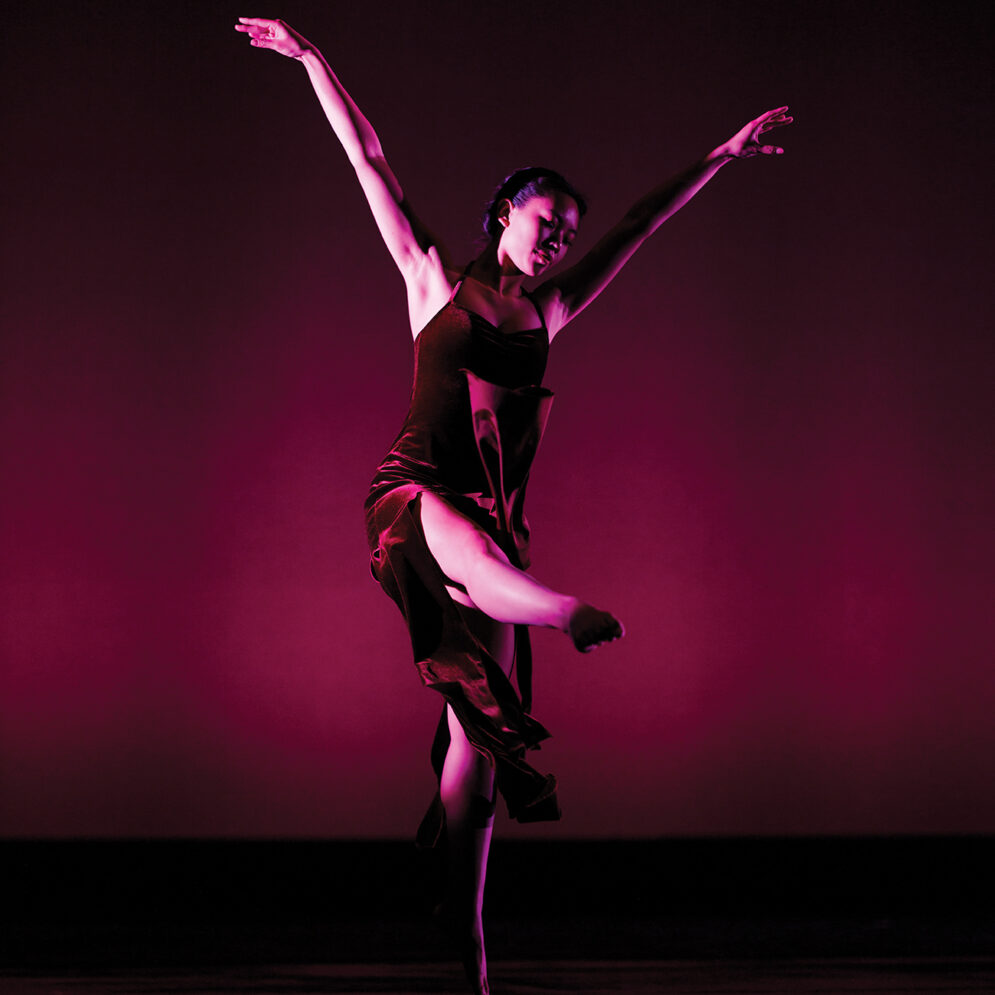
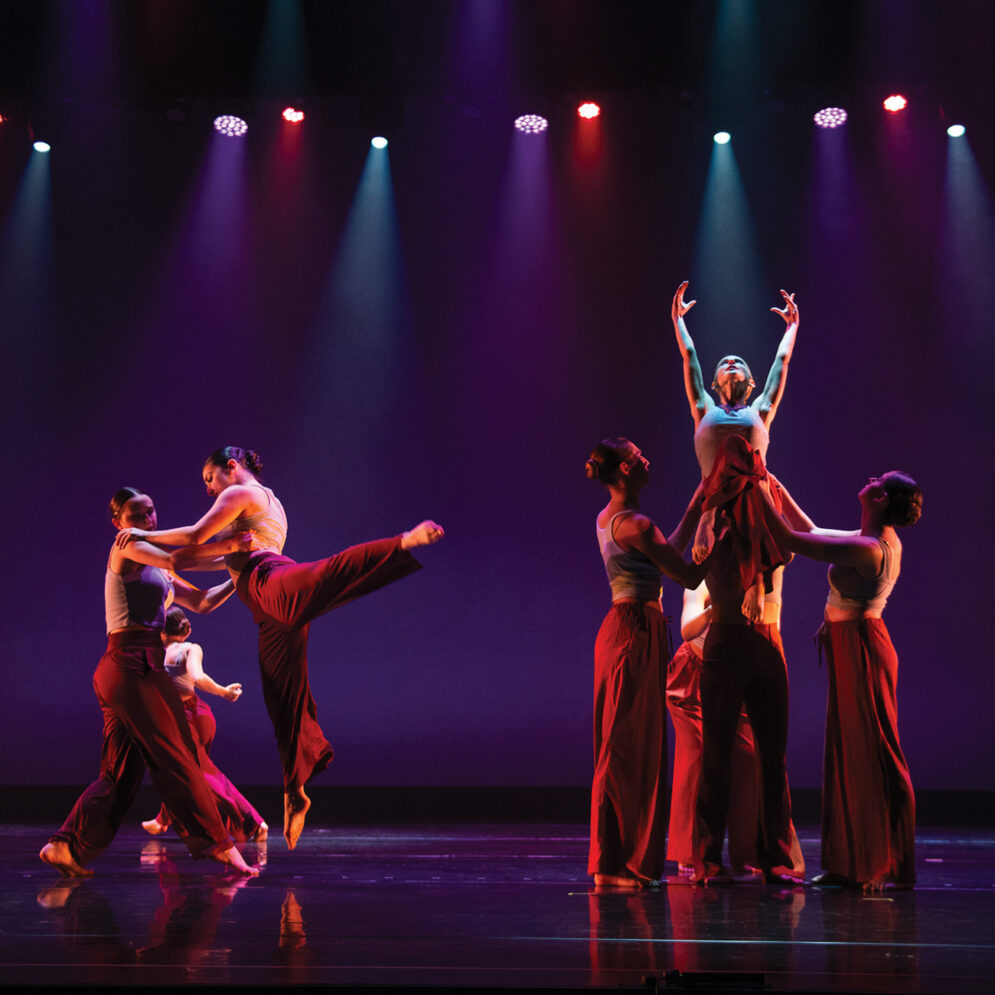
Moments from the 2024 Orchesis dance performance, featuring choreography by (left to right) Horacio Heredia, Lisa Deyo and Emily Olster, and lighting design by Clint Bryson. Photos by Brittany App and Joe Johnston.
“That’s one of the beautiful things about this program: Each of these students brings their own strengths to it,” said Stanton. “They learn how to organize a group of people, how to collaborate on a big project and incorporate others’ ideas, how to produce something that others will consume. They have very tangible examples that they can use in the future, especially when it comes to leadership.”
Since dance is a minor at Cal Poly, all dance students balance another major area of academic focus with a demanding rehearsal schedule. Some students find that dance is a way to enhance the other things they’re learning.
There’s no other way for us to teach what we teach. You can’t learn about dance unless you do it.
Leann Alduenda, current head of the dance program
“For my final project, I bridged both my biology and dance degrees by choreographing a dance based on the immunology research I was conducting,” said Misty (Moyle) Kasky (Biological Sciences ’12), who currently works as a physician in Nevada. “I genuinely believe that my time in Orchesis played an integral role in helping me to develop the skills and confidence to get into — and succeed in — medical school. Orchesis gave me a foundation that extended far beyond the dance studio.”
For many students, the opportunity to be involved in creative work like dance is a critical counterbalance to what they’re doing in their majors.
“I can’t tell you how many times people have taken a step back from their dance rehearsals to focus on their majors, and then their grades tanked — and then they get involved with a performance again and see their grades go up,” said Stanton. “Dance isn’t some ancillary little thing that we do to just cleanse the palate for the real work. It’s part of the real work.”
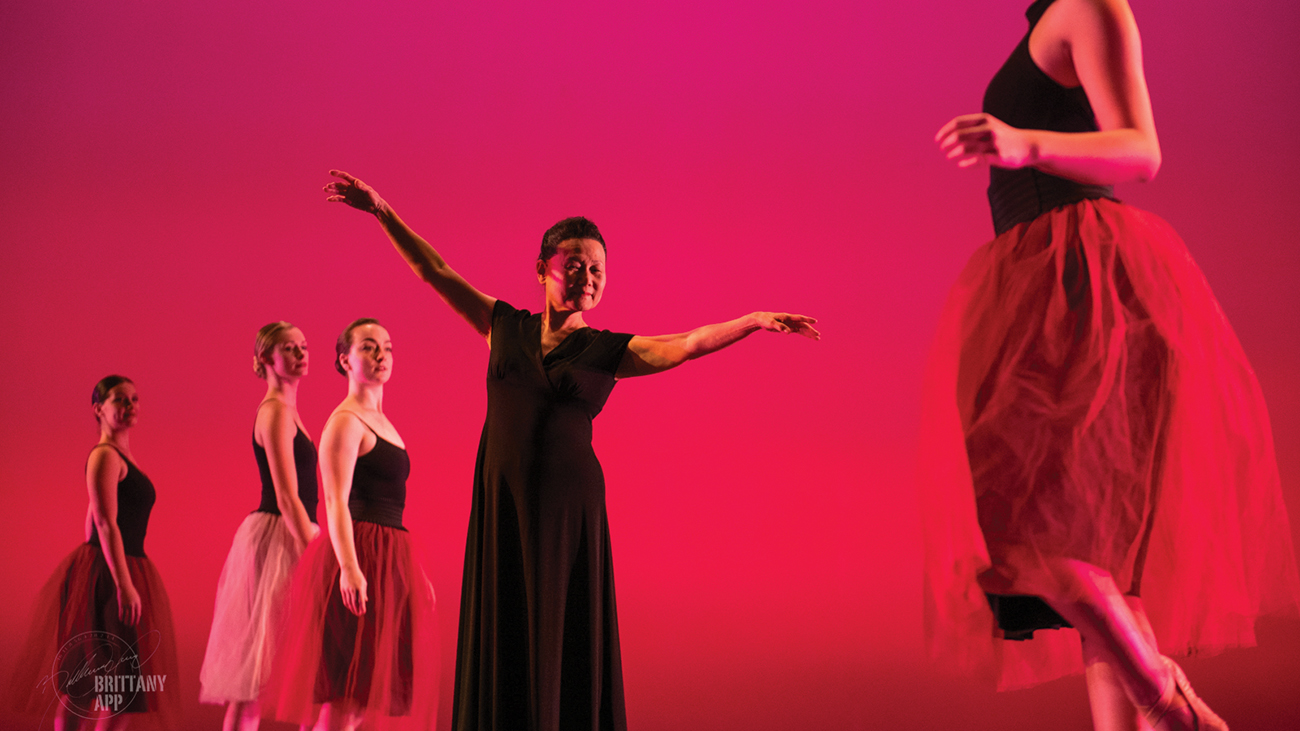
At the 50th anniversary Orchesis show in 2020, Moon Ja (center) returns to the stage to take part in the dance performance “Metamorphosis,” choreographed by Lisa Deyo, with lighting design by Clint Bryson. Photo by Brittany App.
Moon Ja had intended to keep teaching at Cal Poly for 50 years, but in 2012, her 42nd year on campus, a fractured femur forced her to finally retire from teaching dance. However, the culture she established continues to shape the program and its alumni years later.
“Even after she stopped being the director, she hosted the candlelight initiation for new Orchesis members at the beginning of each school year,” said Cal Poly dance instructor Kathleen Ford, who studied under Moon Ja. “In the dark dance studio, she would explain the history of Orchesis and emphasize the importance of our art form and its impact on Cal Poly. Her candle was the first to be lit, and the flame was passed to each dancer in the room. This created a meaningful bond between the current company members and its rich legacy.”
She’s this little, tiny woman with this charming smile, but she is just so fierce and the relentless energy that she has is amazing.
Diana Stanton, former head of the dance program
Former students and colleagues alike see Moon Ja’s personality reflected in how the program operates now.
“She had a clear expectation of excellence, but she was also inquisitive, curious, deeply invested in her students and wonderfully warm,” said Kasky. “What stands out most in my memory is her positivity, her genuine investment in her students’ well-being and personal lives, and her solutions-oriented attitude — she was always seeking to make progress and find answers, regardless of the barriers in her way.”
“Being a part of Orchesis meant everything to me — it provided a sense of belonging, a sisterhood, and a family,” said Melissa Scatena (Business Administration ’99), who established a scholarship after graduation in memory of fellow Orchesis member Sonia Sandoval. “I’ve been coming back to the final show at Cal Poly to present the award since its inception. I see Moon Ja every year, and she has always been a great supporter of this memorial award and of me throughout the years.”
Moon Ja at the entrance to the dance studio named in her honor. Photo by Joe Johnston.
For Stanton, the ethos of Orchesis and the Cal Poly dance program is exactly what Moon Ja made it to be.
“I think the sense of community, the connection that people have with each other, the sense of tradition and importance about what we’re doing, the sense of caring for each other — it’s all the sense that she created, that this is a we, not a me,” said Stanton. “She’s this little, tiny woman with this charming smile, but she is just so fierce and the relentless energy that she has is amazing. I honestly don’t know how she did it.”
For Moon Ja, the relentless pursuit of her dreams has been its own reward. “Being a professor was my childhood aspiration,” she said. “Professors do not make much money, but to share what I know with my eager students makes me feel so rich. And my loving family’s unconditional support made my Cal Poly years fruitful.”
This spring, alumni astronaut Victor Glover helped set a new milestone in the history of human space travel.
Look back at all that’s changed over Cal Poly’s 125 years — and how Learn by Doing has evolved through the decades.