Feature
125 Years of Learn by Doing
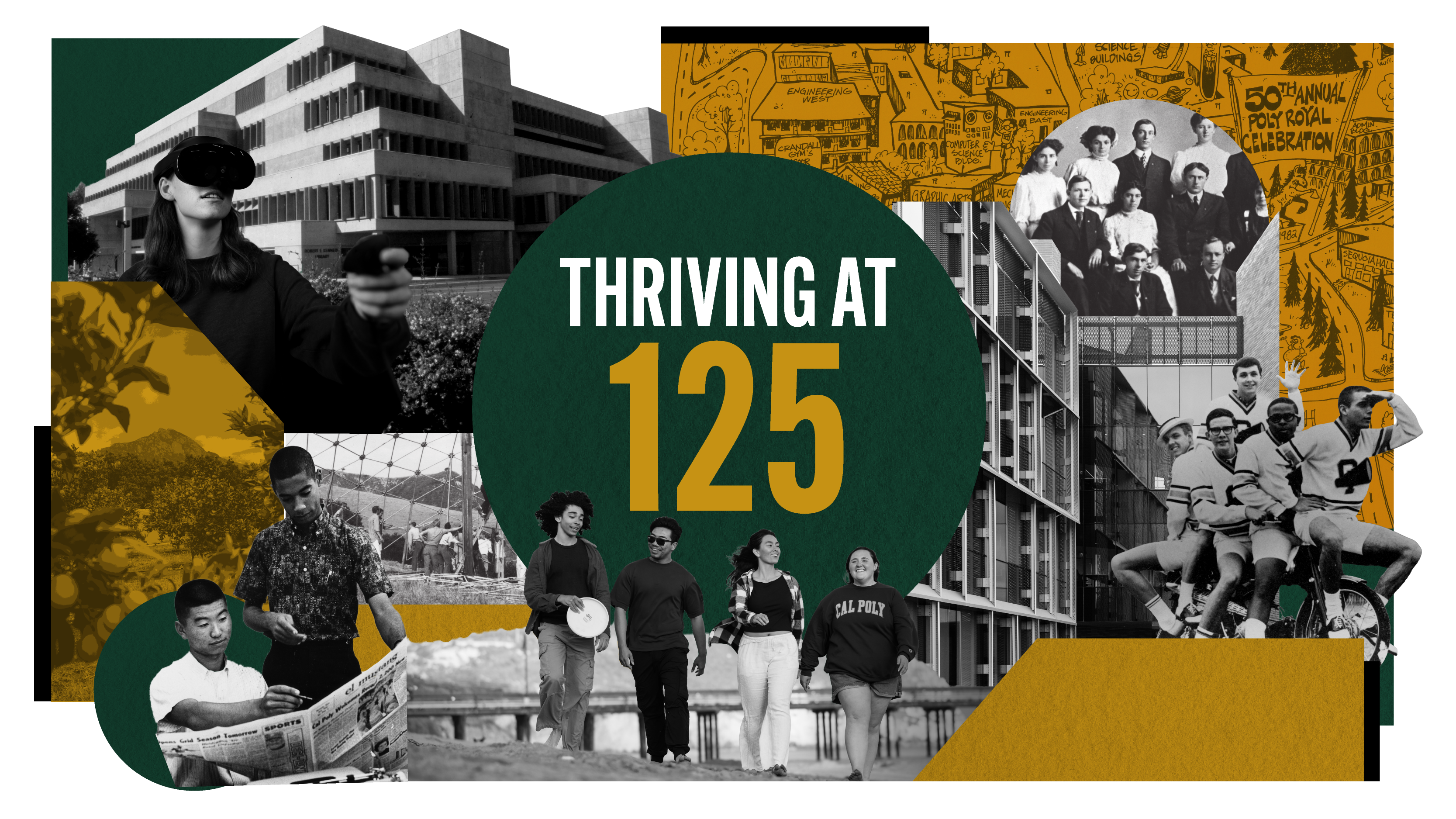
Look back at all that’s changed over Cal Poly’s 125 years — and how Learn by Doing has evolved through the decades.
Compiled by Robyn Kontra Tanner
Photos courtesy of University Archives
Share this article:
The scale of Cal Poly’s History can make Mustangs of all generations feel inspired, proud — and maybe a little overwhelmed.
So much global, industrial, political and social change has occurred in the last century that the small vocational school founded in 1901 can seem completely unfamiliar compared to the advanced university that thrives today.
But don’t let the black-and-white photos, changing nomenclature and old buildings fool you. When you look closely, it’s clear that Mustangs have always had something special in common: a polytechnic education rooted in unforgettable Learn by Doing experiences. For more than a century, the university has adapted to serve our students and our state by finding bold, new ways to teach the head and the hand.
At this crossroads — when the university is on the doorstep of more exciting changes — explore our humble beginnings, our brave first steps and our learning experiences that continue to stand the test of time.
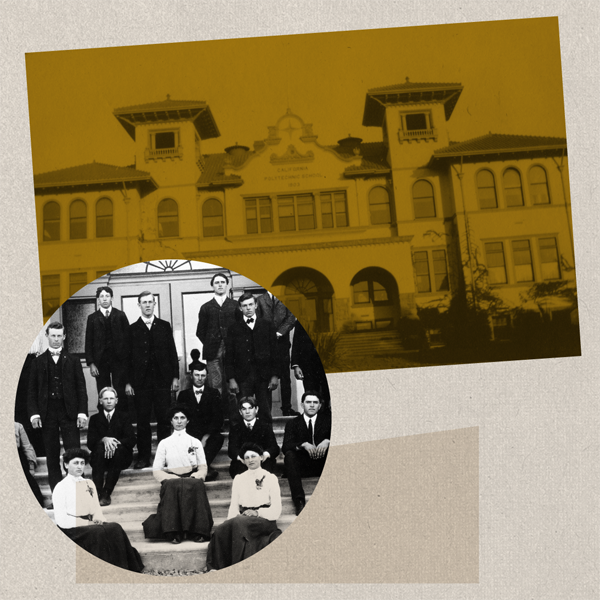
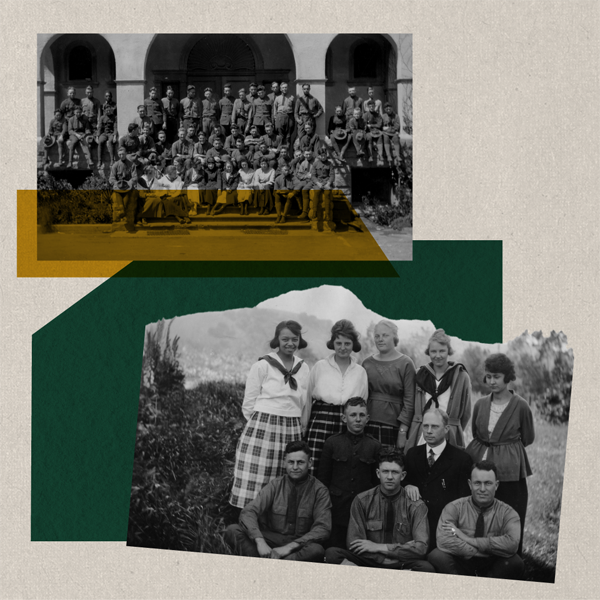
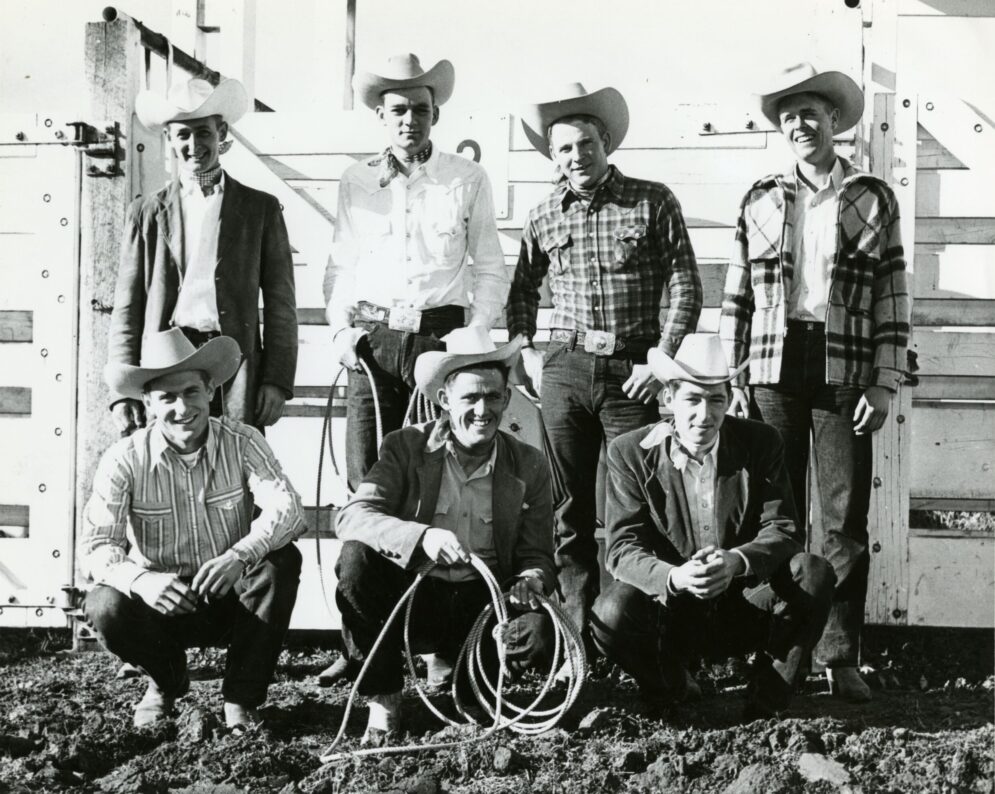
1901-1930: A New School Finds its Footing
The California Polytechnic School was founded as a co-ed vocational school with practical programs in agriculture, engineering and household arts that took three years to complete.
On campus, the Administration Building, dormitories, a creamery and student farms began to take shape. Eventually, the school added business-related courses, printing and aeronautics programs.
As World War I began, state legislation required military training for men. Enrollment dropped as students enlisted in the armed forces or participated in war relief projects. The school provided vocational education to hundreds of disabled war veterans as the conflict waned.
Toward the end of this era, drastic budget cuts reduced the number of classes — especially household arts courses popular with female students. In 1930, a legislative act barred women from attending Cal Poly.
By the end of the 1930 school year, total enrollment reached 407 students.
1901
On March 8, Gov. Henry T. Gage signs the bill establishing the California Polytechnic School.
1903
The first classes take place on October 1 with a total enrollment of 20 students.
1916
The Polygram, the school newspaper, begins publication. The paper is issued every two weeks.
1919
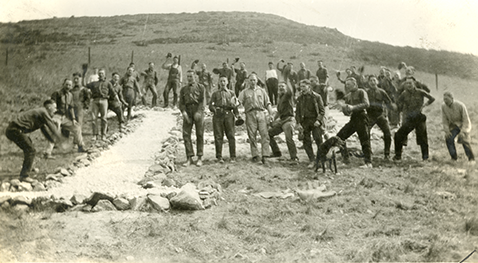
The P first appears on the hillside overlooking campus after students form a rivalry with San Luis Obispo High School.
1925
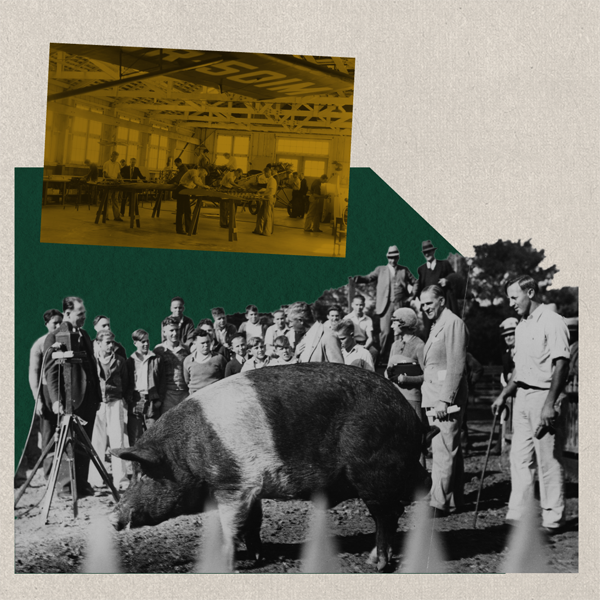
Enterprise projects — the forerunner to today’s senior projects — are established for agriculture students, who spend mornings in class and afternoons on their projects.
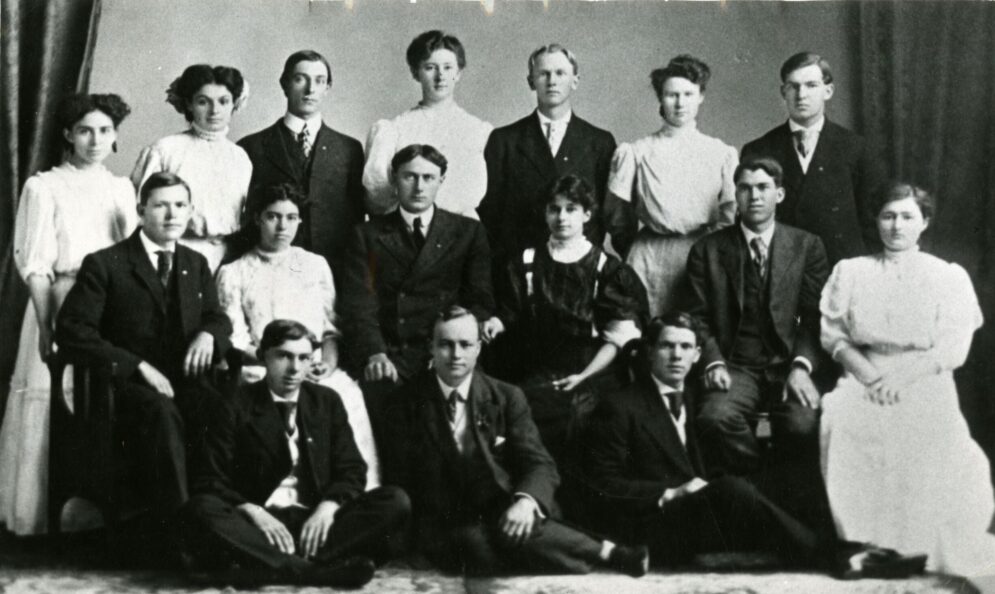
1930-1955: Becoming a College & Preparing for War
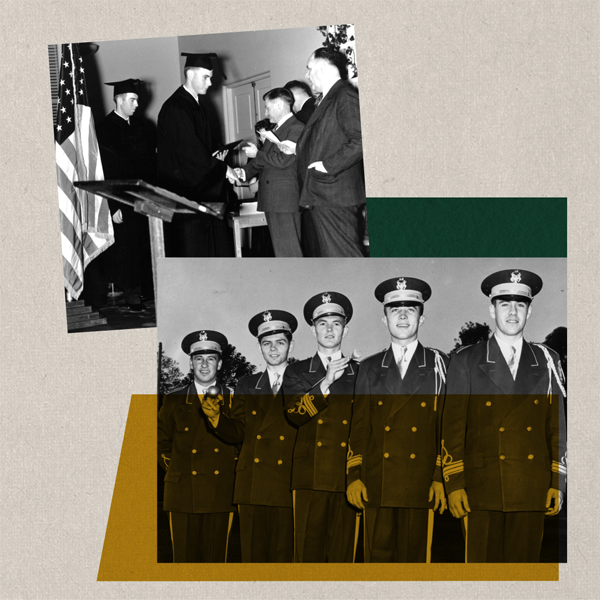
The outbreak of World War II spurred major — yet temporary — change: Cal Poly implemented war-preparedness training programs in industrial arts. The school served as state headquarters for the Food Production War Training Program, providing instruction to 120,000 California farmers. A U.S. Naval Flight Preparatory School on campus trained more than 3,600 cadets. By 1945, hundreds of veterans enrolled thanks to the G.I. Bill.
Around the same time, the State Board of Education granted collegiate status to the California Polytechnic School. In 1947, the name changed to California State Polytechnic College, and it began offering graduate programs in education soon after. Donors gave the school two properties in Southern California that become the Kellogg-Voorhis Unit specializing in equine and horticulture training. Eventually, the Kellogg land became the Cal Poly Pomona campus.
By the end of the 1955 school year, total enrollment reached 3,163 students.
1933
The first annual Poly Royal, the school’s student-led spring open house event, is sponsored by the Future Farmers of America.
1940
Associated Students is founded, and officially incorporated in 1964, to establish shared student governance.
1942
Students earn the school’s first bachelor’s degrees.
1946
The architecture program debuts to help meet the growing state of California’s post-war needs.
1947
The Cal Poly fight song, “Ride High, You Mustangs,” is penned by Director of Music H. P. Davidson.
1949
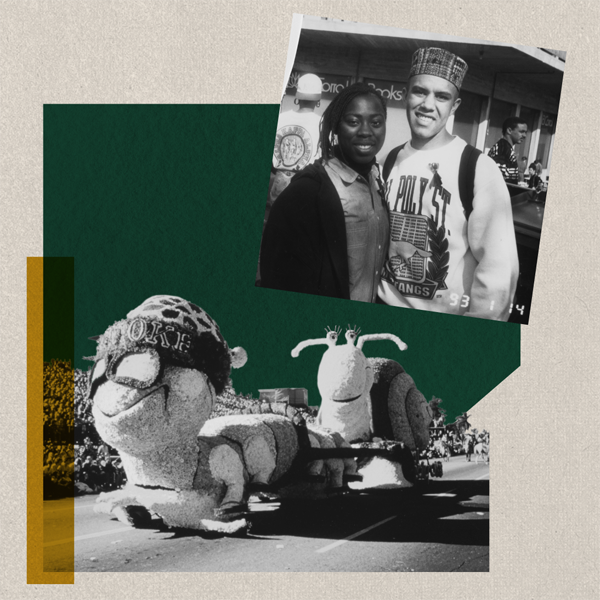
Students in San Luis Obispo and Pomona produce the first Cal Poly float for the Tournament of Roses Parade.
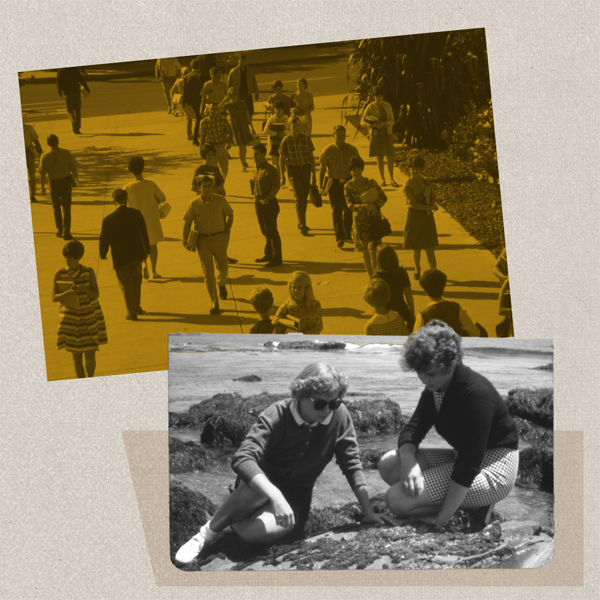
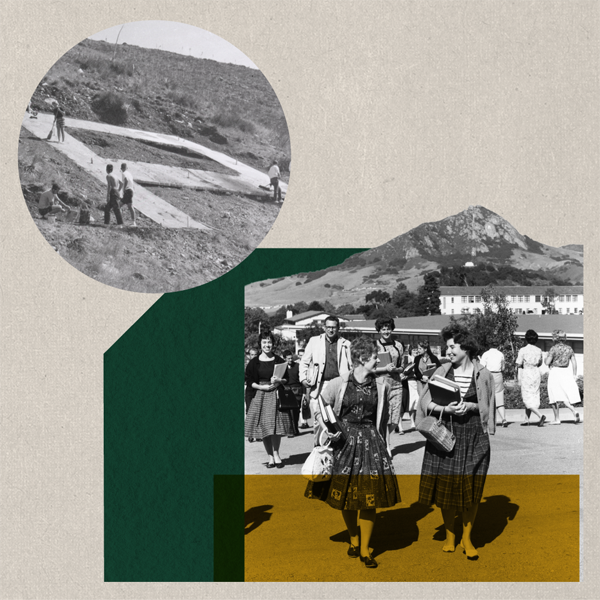
1956-1979: Learn by Doing EXPERIENCES Take Root
Pressure from women in the community led Cal Poly to once again admit female students, invest in proper facilities and reintroduce programs in home economics, with courses in dietetics and nutrition, family studies, child development and textiles. The overall student population grew sharply, more than doubling between 1956 and 1966.
A burst of hands-on programs came to fruition in this era, including many beloved learning opportunities that shape the learning experience today. Academic units were organized — and reorganized into schools — as the university added programs from business to computers.
The Leaning Pine Arboretum began to grow on the north end of campus, and the University Union, Architecture and Fisher Science buildings opened their doors.
By the end of the 1979 school year, total enrollment reached 15,592 students.
1957
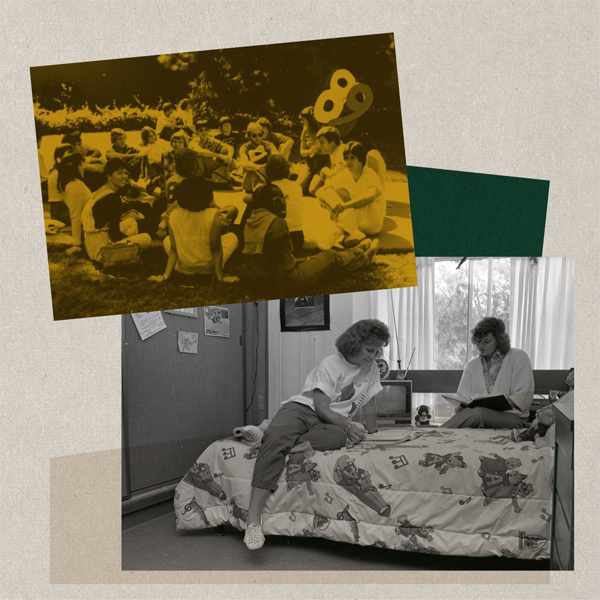
Cal Poly hosts the first Week of Welcome.
1960
A plane crash kills 16 members of the Cal Poly football team, the team’s student manager and a booster in Toledo, Ohio.
1963
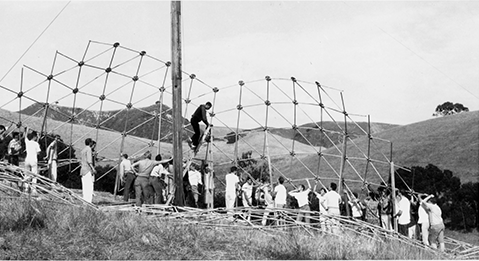
Construction begins on the Shell House, the first of the iconic architecture projects in Poly Canyon.
1964
The first Design Village event takes place.
1968
Campus radio station KCPR earns its licensing from the FCC.
1969
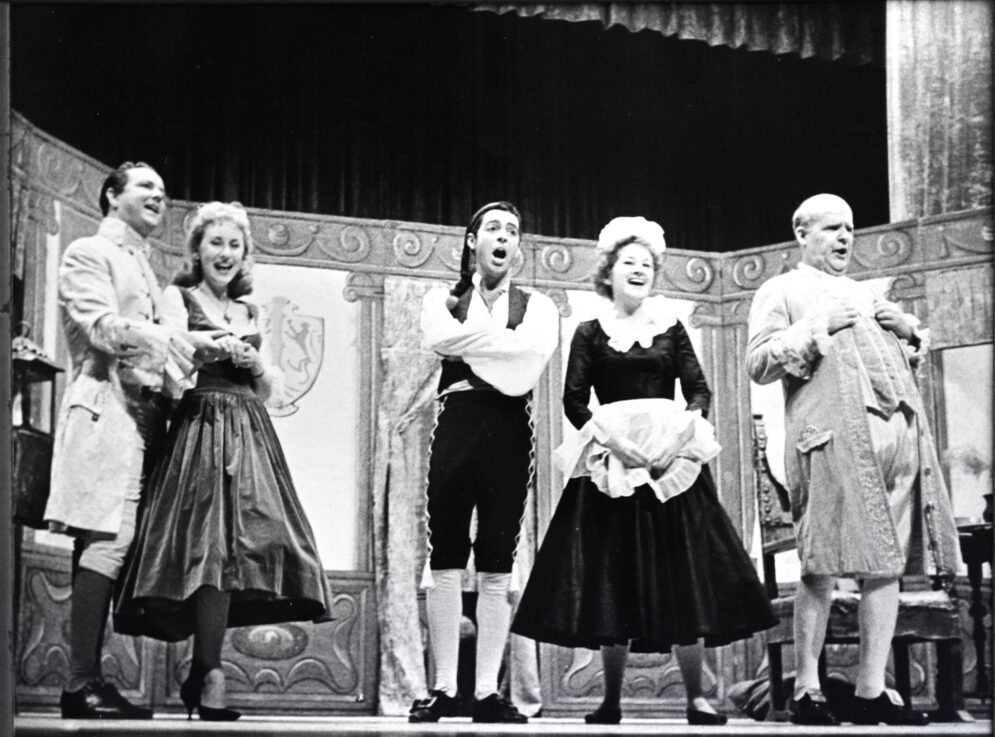
The Orchesis Dance Company is founded and gives its first performance.
1972
The first Cal Poly Volunteer Income Tax Assistance clinics take place. The student-run clinics become an annual event in 1992 to serve local community members.
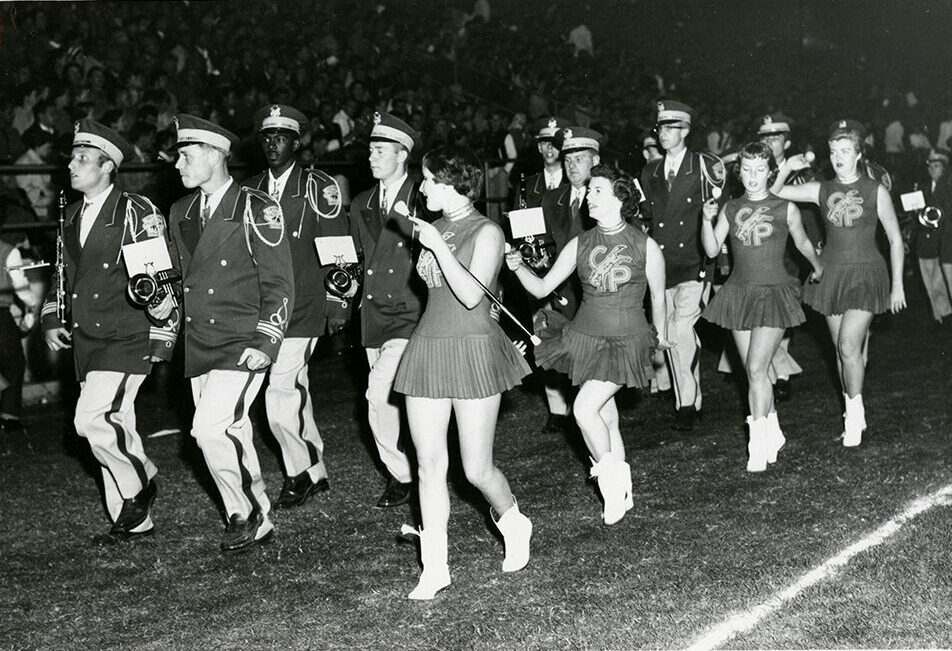
1980-2001: A NEW CAMPUS AND ACADEMIC LANDSCAPE
President Warren J. Baker leveraged fundraising during this era to support capital projects and Learn by Doing opportunities. A host of new buildings redefined the campus experience, including Kennedy Library, the Advanced Technologies Laboratory, the Recreation Center, the Business Building, the Performing Arts Center, the Dairy Products Technology Center and the Poultry Center.
Academic programs were reorganized in 1986 and again in 1992, when they became the six colleges that exist today. The university’s spring showcase was reimagined as “Open House.”
In 1992, the university earned its first Best in the West ranking from U.S. News and World Report, which has continued every year since.
Total enrollment grew to 17,028 students.
1981
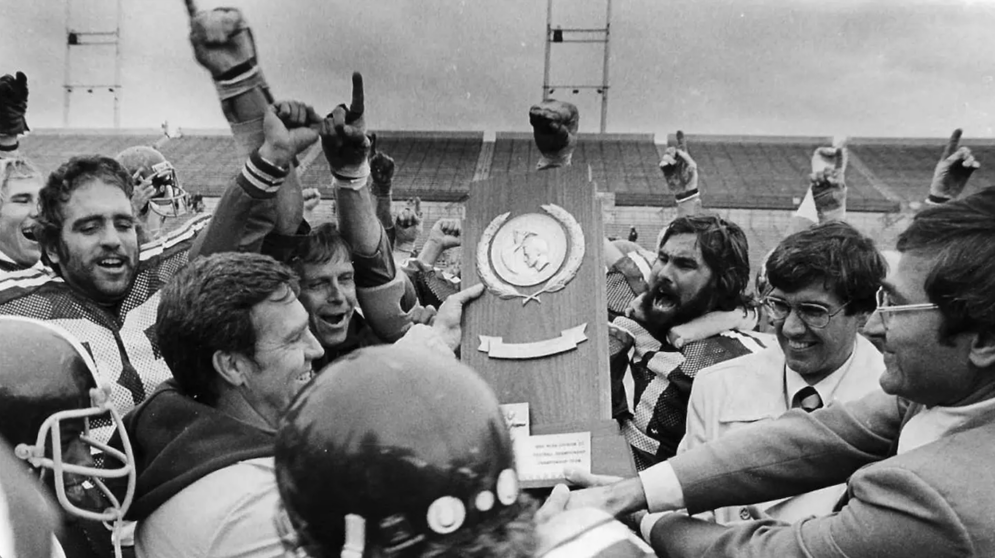
The football team wins the Division II national championship for the 1980 season.
1981
The Multicultural Center is created to bring visible systems of support for underrepresented and marginalized students.
1992
The Student Managed Portfolio Project launches, giving students studying finance the chance to invest funds from the Cal Poly Corporation.
1993
The 3,200-acre Swanton Pacific Ranch becomes part of Cal Poly thanks to a donation from alumnus Al Smith.
1994
Athletics moves from NCAA Division II to Division I.
2001
Unocal Corp. donates its historic pier in Avila Beach to Cal Poly to establish a marine science education and research center.
2002-2026: CALIFORNIA IMPACT AND FUTURE-FOCUSED PROGRAMS
A variety of advanced academic buildings debuted during this phase under the leadership of Presidents Baker and Jeffrey D. Armstrong, including the Baker Center for Science and Mathematics, the JUSTIN and J. Lohr Center for Wine and Viticulture, the Plant Conservatory and the Bonderson Engineering Projects Center. New degree programs emerged in wine and viticulture, liberal arts and engineering studies, fire protection engineering and business analytics.
The university rallied around undergraduate research opportunities with summer research fellowships emerging across colleges. In 2017, alumnus William Frost and his wife, Linda, gave a record-setting $110-million gift to Cal Poly. Their contribution built the Frost Center for Research and Innovation, which opened in 2023, and named the College of Science and Mathematics after legendary educators Phillip and Christina Bailey.
More students began living on campus in this era thanks to the Cerro Vista apartments, Poly Canyon Village and the yakʔitʸutʸu residence halls. The Vista Grande Dining Complex, the expanded Recreation Center and the Welcome Center opened to support the campus community. Key programs and spaces also launched to bolster inclusion and belonging among all students, including PolyCultural Weekend and the Latinx/e Center for Academic Success and Achievement.
The campus community weathered the COVID-19 pandemic with virtual classes, regular testing and social distancing practices. In 2023, Cal Poly’s student body included more women than men for the first time.
Total enrollment grew to 23,245 students.
2003
The inaugural Vellum Furniture Design Competition invites students to design and build innovative pieces of furniture.
2006
The CubeSat club builds its first satellite payload.
2010
The Center for Innovation and Entrepreneurship debuts with space and programs on campus and in Downtown San Luis Obispo for budding startups.
2012
The Cal Poly Scholars program launches, offering financial aid and support to students from partner high schools. In 2018, the Cal Poly Opportunity Fee begins boosting funding for the program.
2013
The Journalism Department launches Mustang Media Group, a digital-first, student-run news organization bringing together the existing print, web and broadcast outlets.
2013
Cal Poly and the California Strawberry Commission establish the Strawberry Center as a hub for research.
2022
The Noyce School of Applied Computing is founded.
2022
The Wildland-Urban Interface Fire Institute establishes a hub for research, training and education.
2026
Alumnus and astronaut Victor Glover pilots NASA’s Artemis II lunar mission, traveling farther than any human being in history.
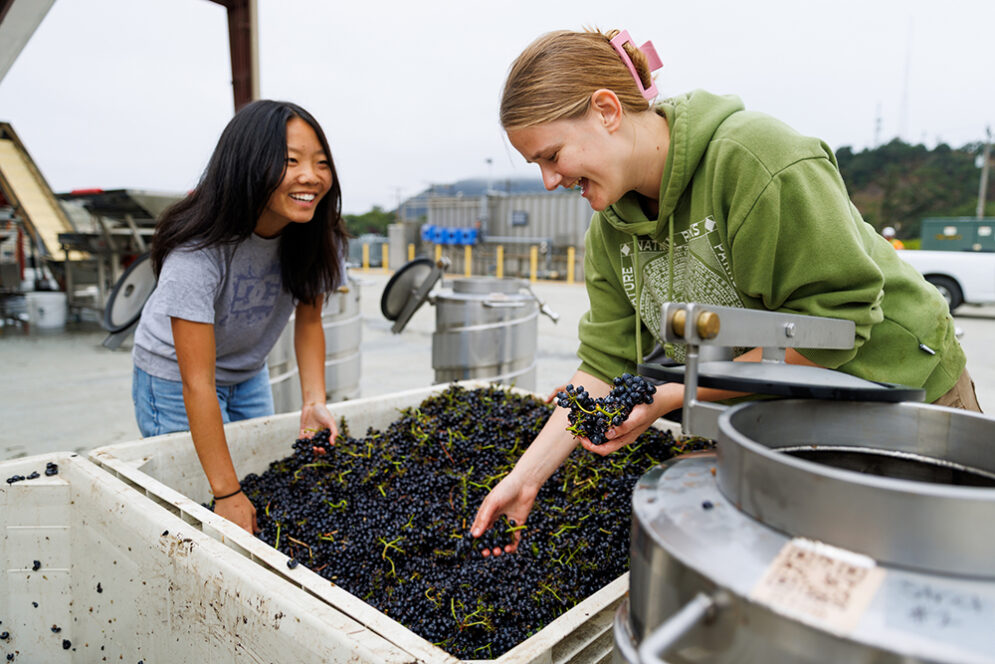
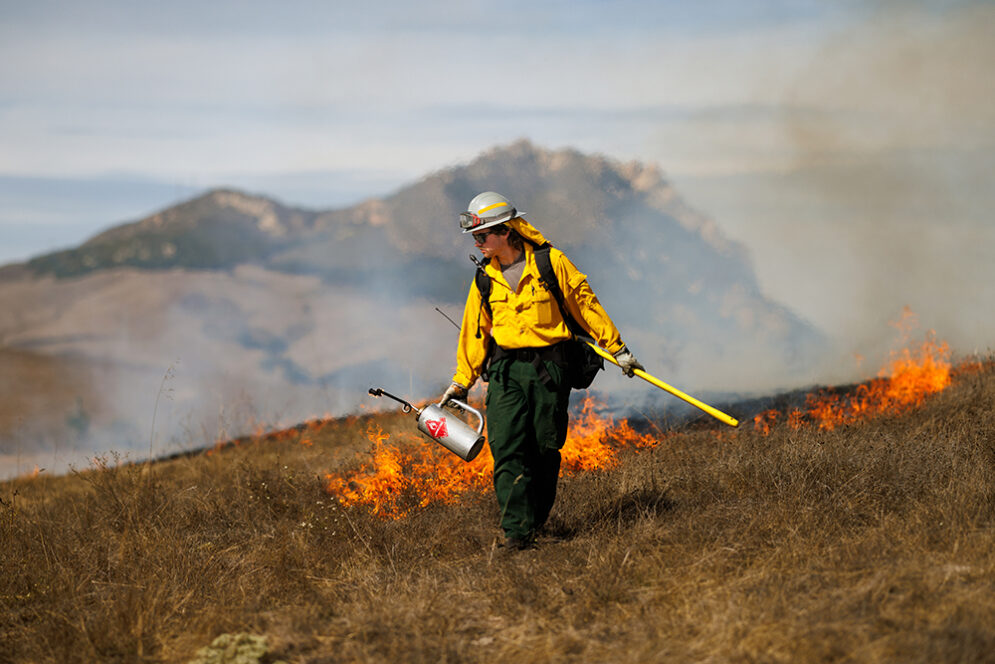
Our Next Chapter
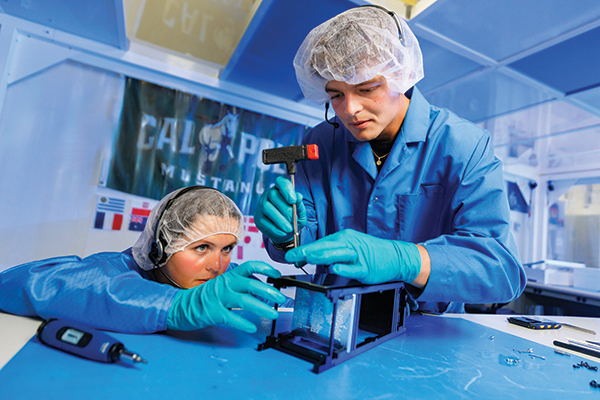
Cal Poly is continuing its tradition of evolution with major opportunities for innovation on the horizon in the coming years.
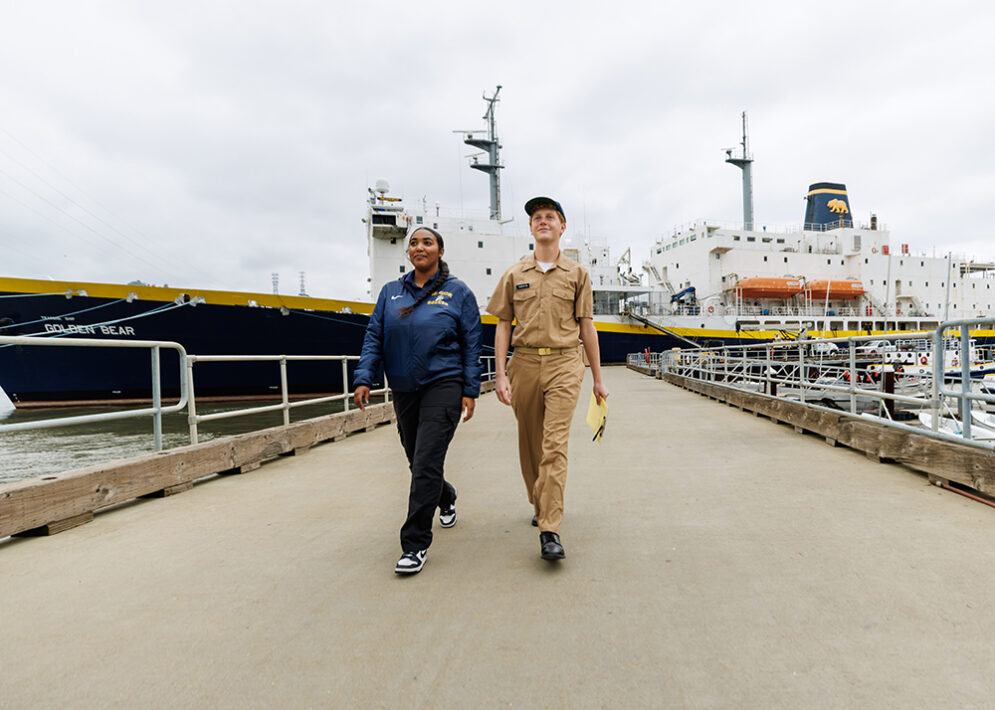
The university is in the midst of academic and administrative integration with the former Cal Maritime Academy, a fellow California State University campus and the only maritime training institution granting U.S. Coast Guard licenses on the West Coast. The institution is now known as Cal Poly Maritime Academy. This summer, there will be one integrated set of academic offerings across the San Luis Obispo and Solano campuses.
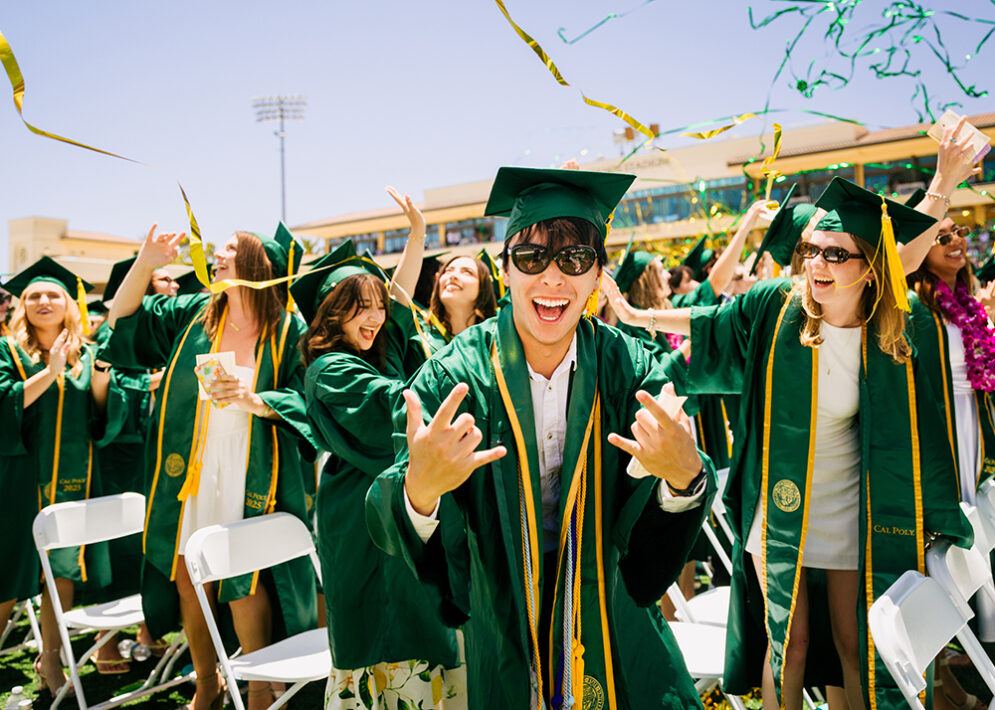
This fall, students will trade in the quarter system for a new semester schedule that aligns with the rest of the CSU and other experiences like study abroad. Faculty and staff have been working collaboratively to review, convert and improve curriculum that will span 15-week terms.

Beginning in 2028, students in select high-demand programs will be able to attend any two of the three terms — fall, spring or summer — giving them flexibility to pursue hands-on experiences when it works best for them. This model supports deeper engagement with internships, co-ops and global learning.
Just Visiting
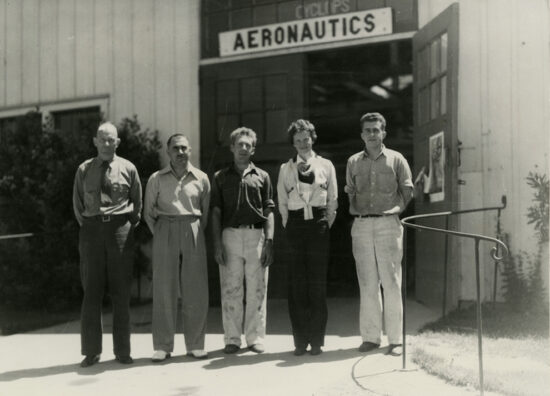
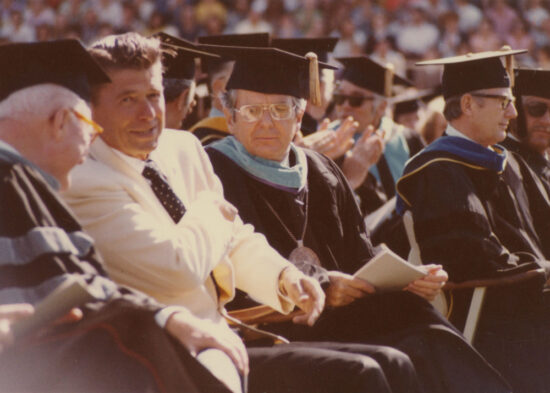
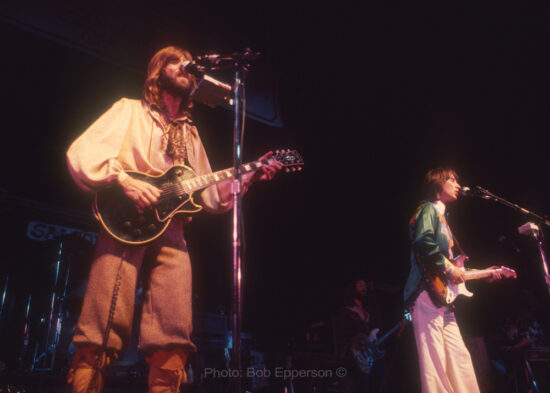
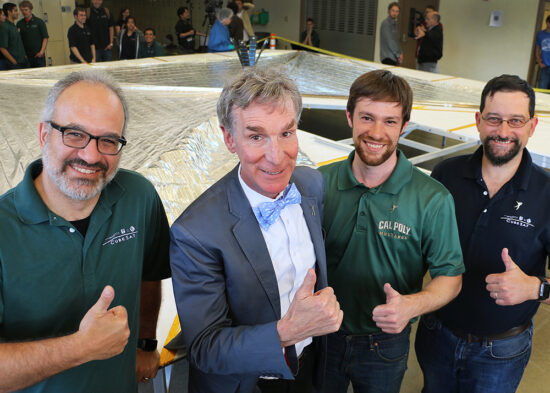
Get to know the famous faces that have stopped by 1 Grand Avenue for work and play.

Your Next Read
Crossing oceans and overcoming every obstacle in her way, Professor Emeritus Moon Ja Minn Suhr revolutionized dance at Cal Poly.
At Cal Poly Racing, students have long designed, built and raced their own cars. The difference now is who gets to move from the shop floor to the driver’s seat.