Feature
Learning at Full Speed
At Cal Poly Racing, students have long designed, built and raced their own cars. The difference now is who gets to move from the shop floor to the driver’s seat.
By Emily Slater // Photos by Joe Johnston
Share this article:
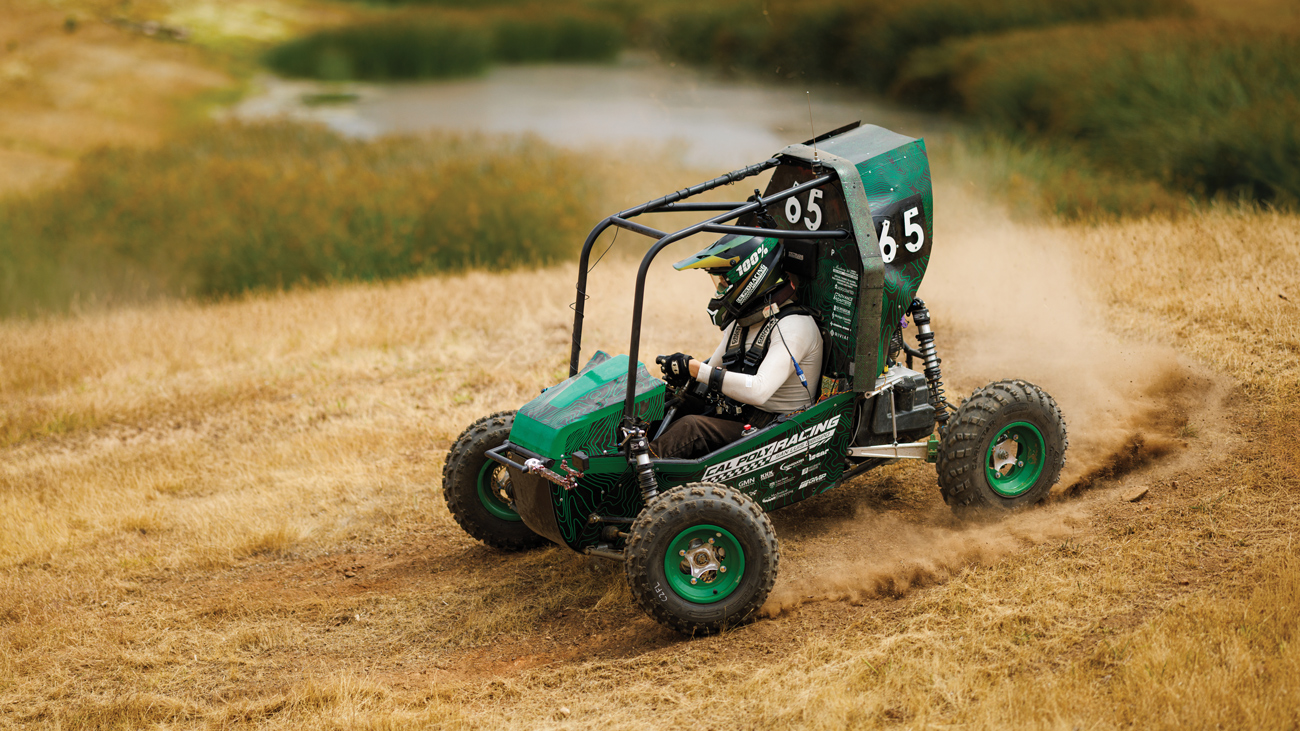
Baja test driver Matthew Shaffer pushes the car to the limit on the testing track.
On a dirt course near campus, Emma Penders eased Cal Poly Racing’s Baja off-road car into position for driver tryouts. The cones mirrored the maneuverability layout the team would face at competition, and she had three runs to keep them standing.
“I was nervous, but I kept thinking, ‘At the very least, I get to drive the Baja car,’” Penders said with a grin. “If it’s the only time I get to do it, so be it.”
When she joined the club in 2023, Penders had no racing background. She began in the Hangar machine shop and learned the car one task at a time. Since then, the mechanical engineering student has become a powertrain lead. That day, she was trying out for one of the team’s competition driving spots.
Cal Poly Racing is among the university’s largest student-run engineering clubs. Each year, students design and build two vehicles for SAE International competitions: an off-road Baja car and a Formula electric race car. The work runs from first sketches to competition, where Cal Poly Racing goes up against teams from around the world and is evaluated on performance and design.
The Baja team at work during off-road vehicle testing.
Penders’ rise from newcomer to leader signals an evolution inside the club.
A decade ago, women in Cal Poly Racing often had to clear a higher bar before they were trusted with the work that mattered. Now, women lead across both Baja and Formula, and new members are coached into complex systems sooner. With that trust comes ownership. Students carry decisions from the first concepts in the Hangar all the way to the moment the car hits the course.
From Desert Races to Design Scores
Off-road racing has a deep history at Cal Poly. In 1972, members of the campus Society of Automotive Engineers (SAE) chapter took two donated 1968 Ford Galaxie taxis and rebuilt them into an off-road race car for the Baja 500. They came back the next year and did it again.
Mechanical engineering lecturer John Fabijanic, who has advised Cal Poly Racing for two decades, said the taxi project set the tone early. “They saw an opening and went racing,” he said.
Over time, the effort became more organized. The project moved on to Toyota trucks, and in 1981 a Cal Poly Toyota driven by professional racer Roger Mears won a Class 7 world championship at the Bridgestone/SCORE Off-Road World Championships.
When SAE established student design competitions, it changed what “go racing” could mean in college. Teams had to show up with a car that could pass inspection, then explain key design choices before heading out for dynamic events, including endurance.
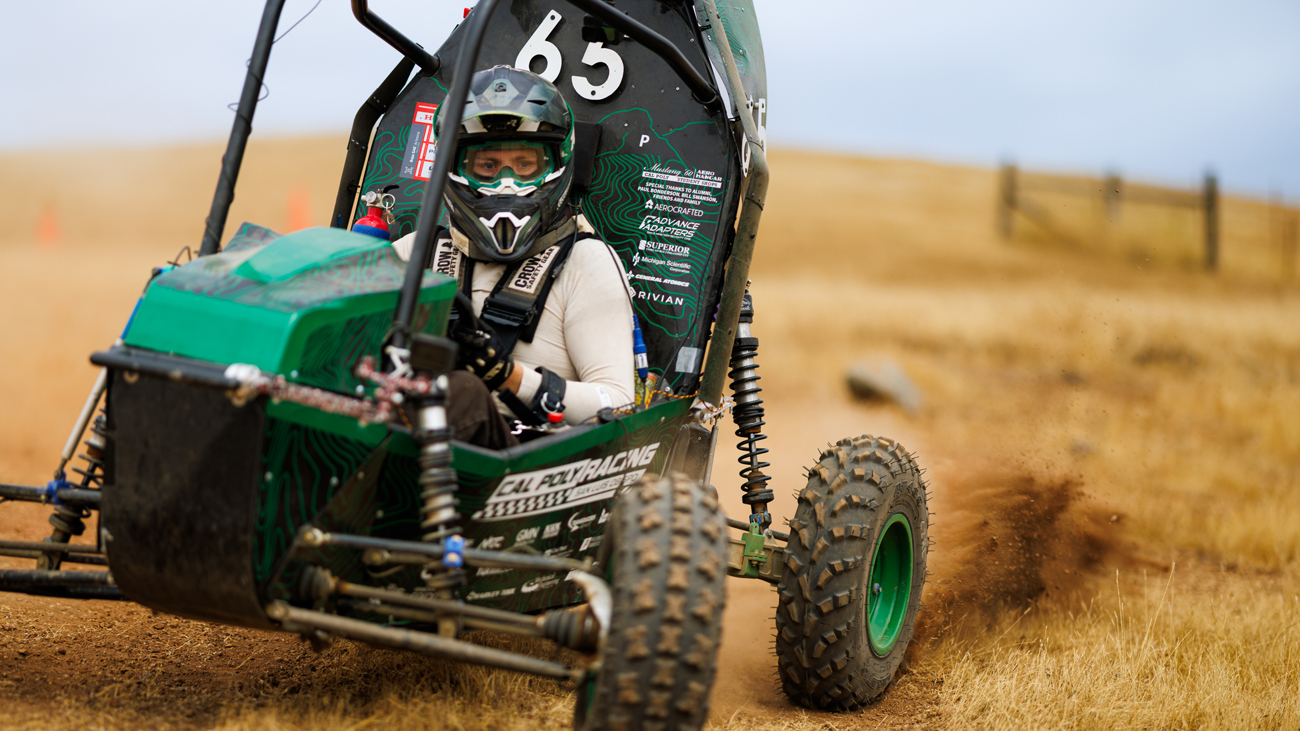
Baja test driver Matthew Shaffer kicks up some dust on the test track.
Eventually, Cal Poly Racing settled into the two-team structure it has now: Baja and Formula. Each draws a different mix of students, but both run on the same premise. Fabijanic estimates students manufacture and assemble about 90% of each car themselves, almost unheard of among peer collegiate teams.
In 2025, that work showed up in results. The team finished sixth overall at Baja SAE Arizona and 11th overall at Formula SAE Electric. Fabijanic said SAE experience can equate to two years of on-the-job experience for employers who know the events.
With more than 125 members, Cal Poly Racing is the largest student chapter of SAE International in California. Fabijanic said better cars come from more voices in the room. “At a minimum, you get different viewpoints,” he said. “The more ideas you have, the more likely you are to come to the right answer.”
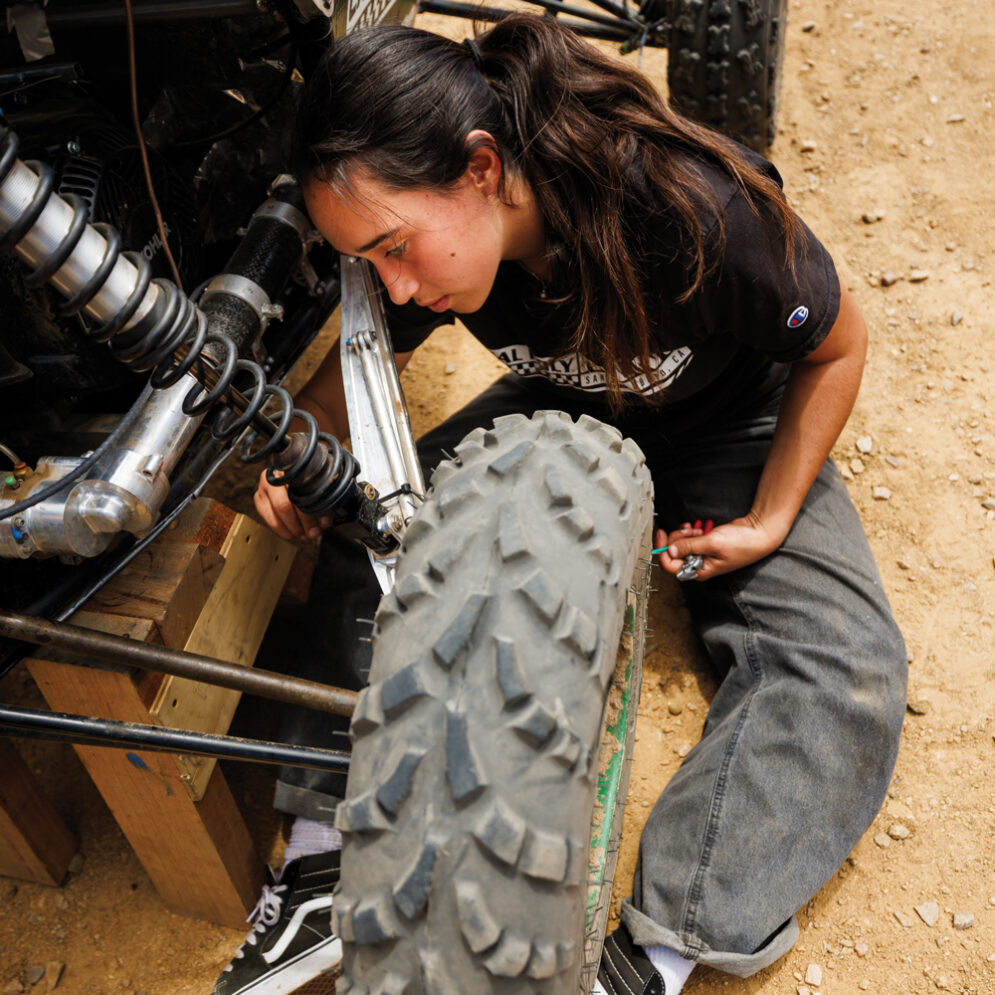
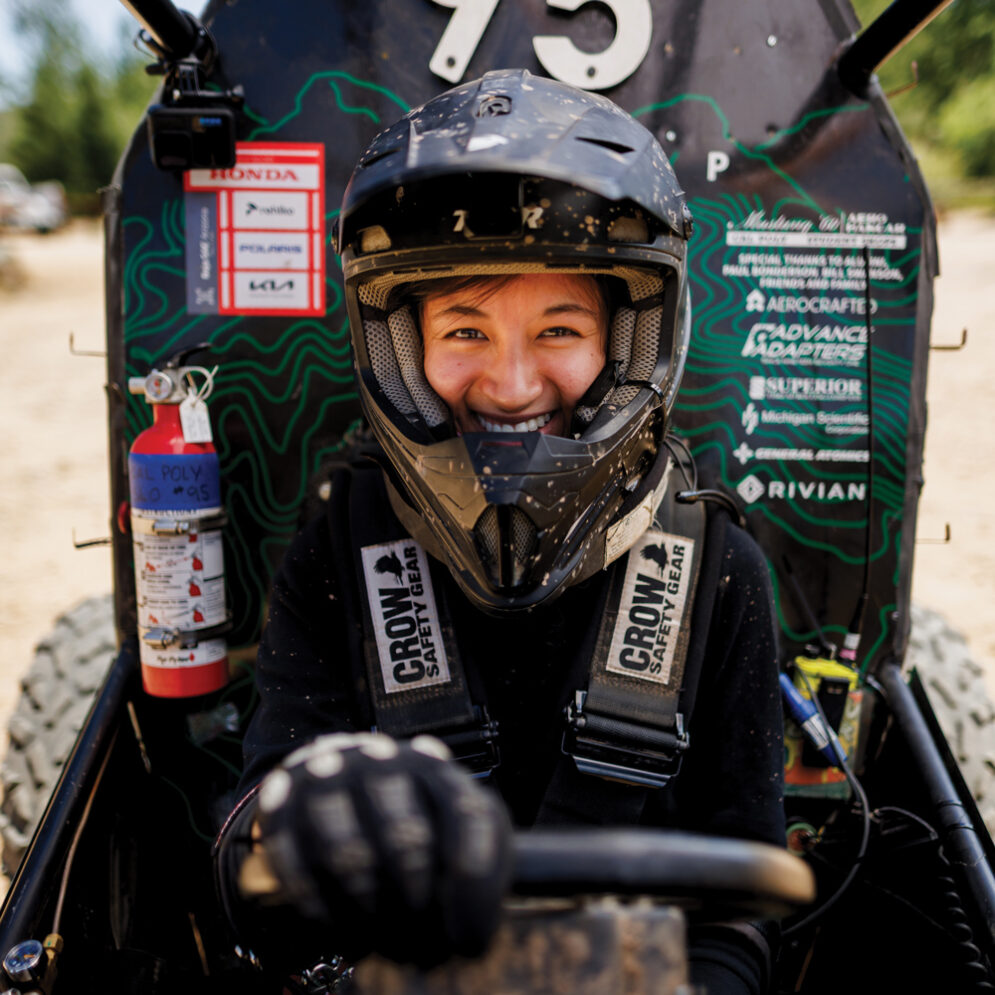
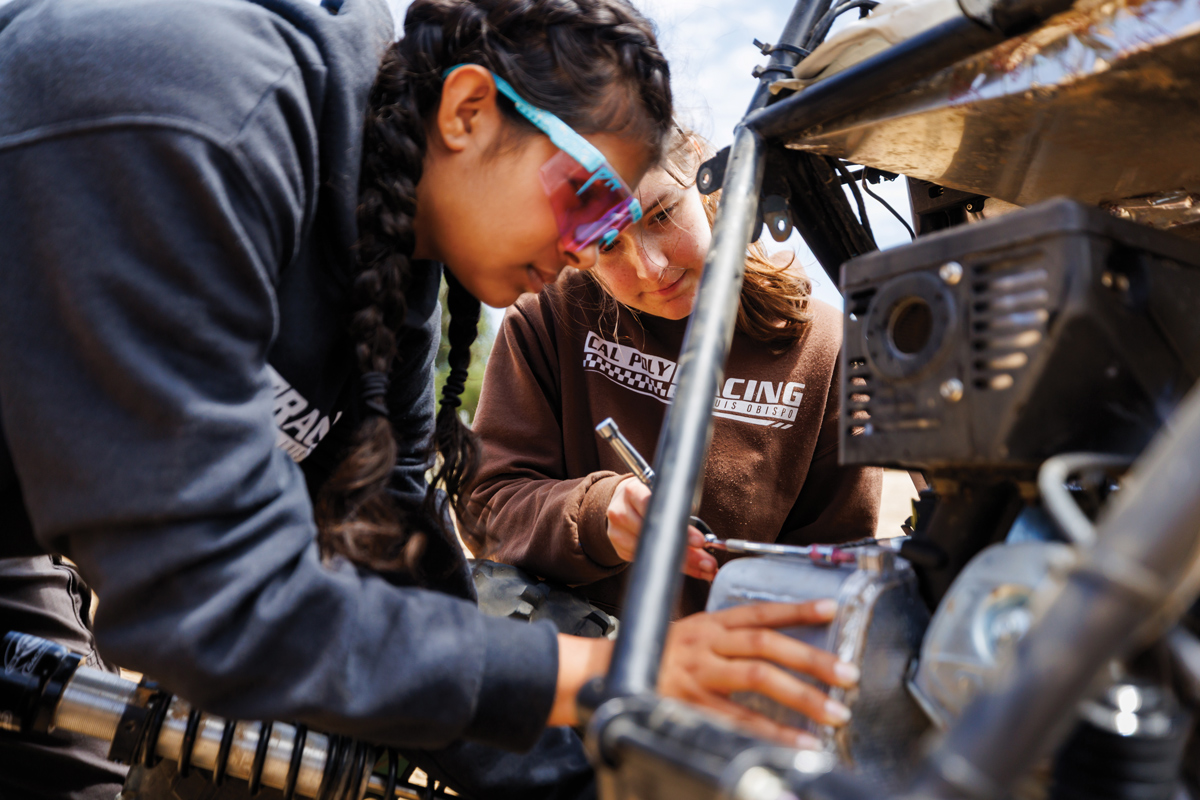
First photo: Selina Bayles tends to the suspension of the Baja vehicle in between laps on the test track. Second photo: Driver Bela Jimenez prepares to take the team’s Baja vehicle on another screaming lap around the test track. Third photo: Students Ramya Kaja (left) and Sarah Talbert repair the Baja vehicle during testing.
How the Work Gets Shared
Alumna Kathryn Webb has watched that mix widen, and the culture change with it. This season, nearly half of Baja’s leads are women, a number that Webb said she still pauses to take in.
Webb, who graduated in 2019 with a manufacturing engineering degree, remembers a time when she was the only woman on the Baja team and one of two women in her major. She served as lead of the composites team and later as Cal Poly Racing president, but she said the climb into roles that carried weight was slow. “The attitude was, ‘Prove to me by labor hours and by skill that you can do the job,’” she said.
Webb said that when she didn’t know an answer, she went home and researched it because the expectation was to figure it out on her own before asking.
Baja has never been a place where one person can hold all the knowledge. Competitions run through timed events and an endurance race, and the car has to keep running through all of it. The only way that works is if more people understand the systems well enough to diagnose problems and fix them fast.
The more ideas you have, the more likely you are to come to the right answer.
John Fabijanic, mechanical engineering lecturer
That is the version of Baja that Lucia Giacalone found when she joined in 2022. Giacalone, a mechanical engineering student, said the work was intense, but the welcome was immediate. “Students need to know the people in charge care about them specifically,” she said. “That’s what made me stick around Baja.”
Giacalone said she stayed for a simple reason: When she showed willingness, leaders handed her responsibility. She moved from powertrain lead into the top role on the team, and now she tries to offer new members the same on-ramp she was given.
Next season, Fabijanic said, Baja is on track to have an all-female management team for the first time. For Webb, it’s the kind of milestone that would have sounded impossible when she was the only woman in the room.
The Formula team at work during on-track vehicle testing.
Where the Build Gets Organized
On Formula work nights, the club spills into a Frost Center classroom. Laptops glow across the desks. Leads line the walls with updates on parts orders, machining schedules and what has to be ready next. The car they’re building is electric, and the planning starts early.
Cal Poly Racing President Ria Mehta said the team used to pack into a 30-person classroom. Now they meet in a much larger space, and it still feels tight. The growth has forced the team to get sharper about how it works. Mehta called the old model “siloed excellence” and said the goal now is to be excellent across the whole build, not just within one subteam. That means making it easier for people to plug in — and harder for knowledge to get stuck in one corner of the room.
Jules Boehle, the Formula team manager, sees that at the front door. New members show up eager to help but unsure where to start. The most common question is simple: What if I don’t know anything? Boehle said that’s exactly where she began. She joined without knowing how to use a torque wrench and later found herself teaching others.
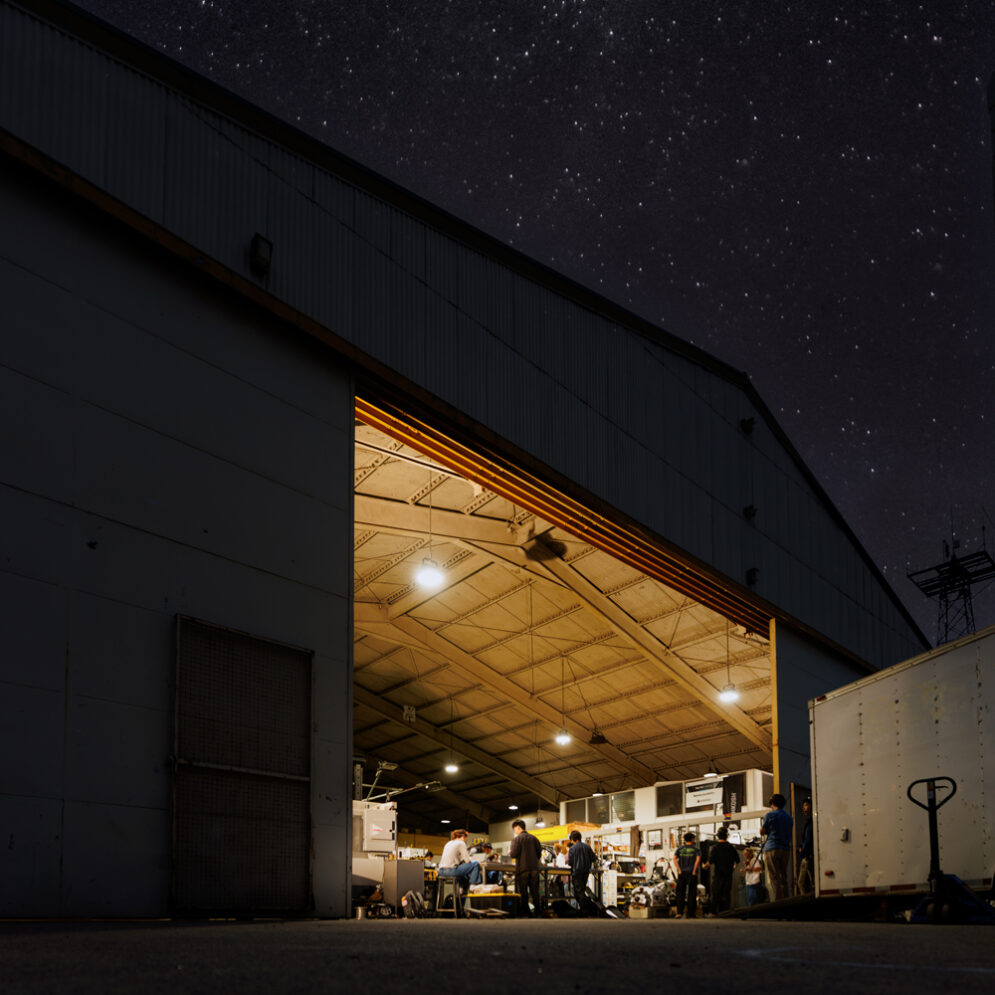
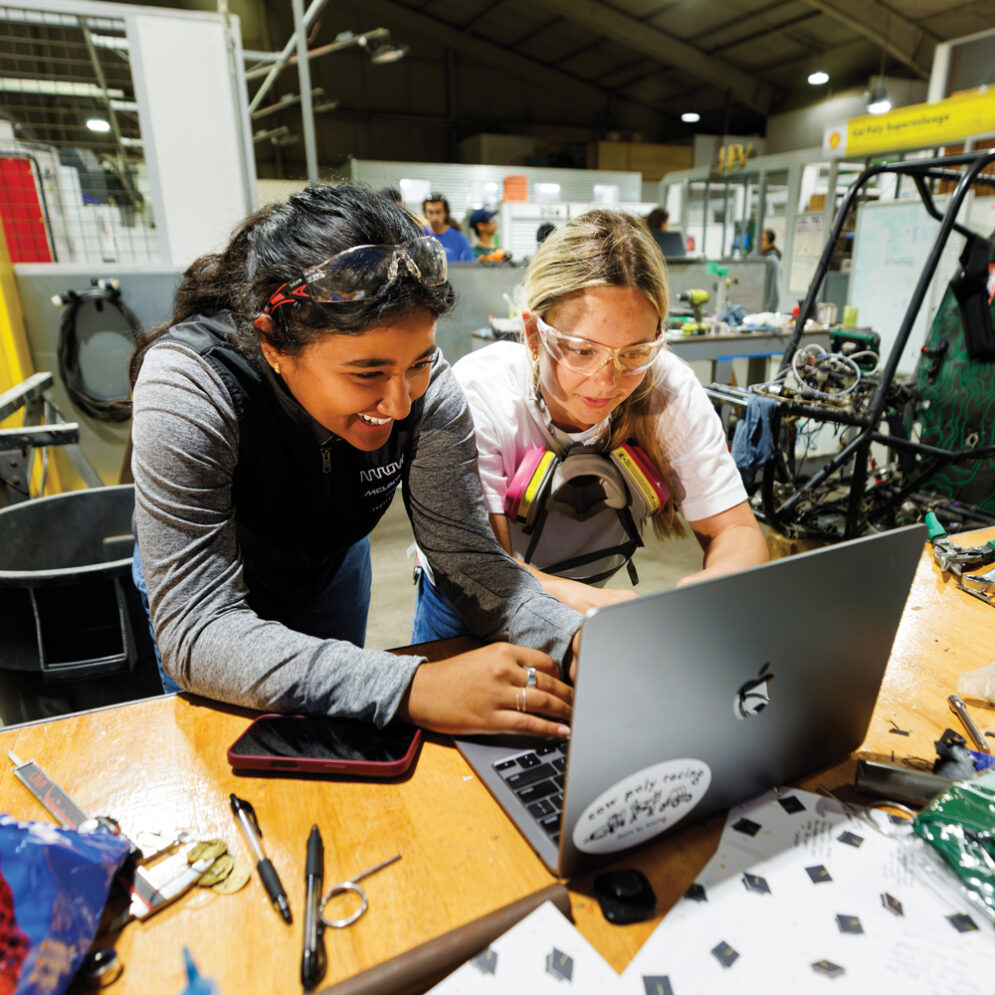
First photo: A work night lights up the Aero Hangar. Second photo: Ria Mehta (left) and Sophia Goffard collaborate during a team work night in the Hangar.
Materials engineering student Arisha Kabanova focused on another pressure point: who even shows up. Students from her major had barely been represented, even though Formula offers composites work that many materials students don’t get until much later in their coursework. This season, she stepped into first-year materials engineering lectures, introduced herself and invited students to join. “It worked,” she said.
During a recent critical design review, Esther Unti, a mechanical engineering alumna who graduated in 2018 and now works at Lucid Motors, weighed in on the car. Unti came up through Formula and later returned to Formula SAE competitions as a design judge. Kabanova said Unti gave her a thumbs-up on one of the components. Coming from a Lucid engineer and former Formula leader, it was the kind of approval you don’t forget.
From Shop to Starting Line
Fabijanic sees Cal Poly Racing as Learn by Doing at full speed. Students take what they learn in class and execute it, then live with the outcome on race day. That’s part of what makes the team stand out in industry circles.
You can see that connection when alumni come back and work alongside the team. Over that design review weekend, about 10 graduates stayed with the team, helping make fixes and steady the build. It’s a reminder that the Hangar can be a straight line to an engineering career.
Webb remembers when answers had to be earned. Penders joined a team that teaches from the beginning. On the dirt course near campus, she kept the Baja car clean through the cones and climbed out smiling. She earned a competition driving spot. Soon she’ll drive what the team built.
Your Next Read
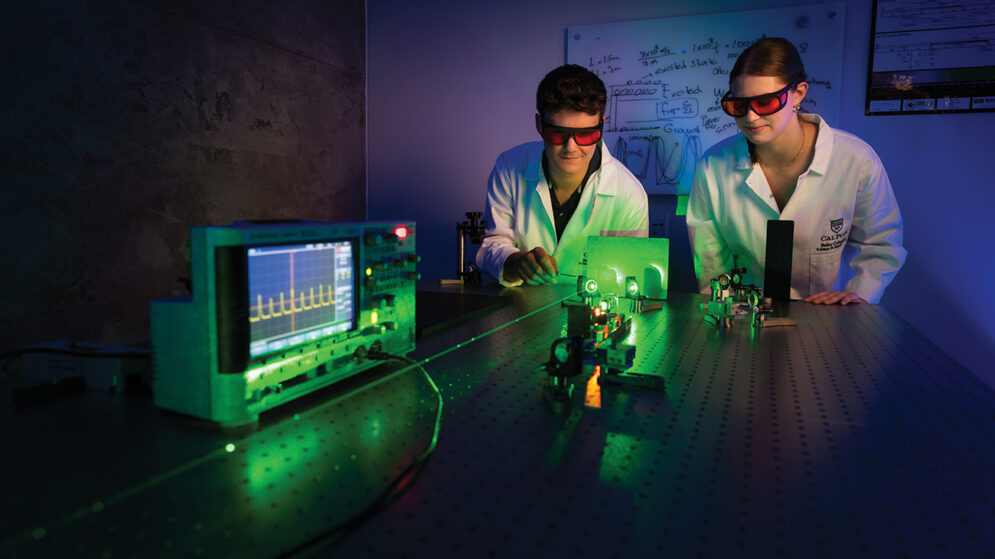
Explore the Physics Department’s Photon Lab, where two students recently took on a technical challenge that made campus history.
Crossing oceans and overcoming every obstacle in her way, Professor Emeritus Moon Ja Minn Suhr revolutionized dance at Cal Poly.