Doing Good
Service in Action
As summer began, a group of students took an Alternative Breaks trip to South Africa to serve a community and expand students’ worldview.
Written and photographed by Dede Onuwaje, comparative ethnic studies and communication studies student
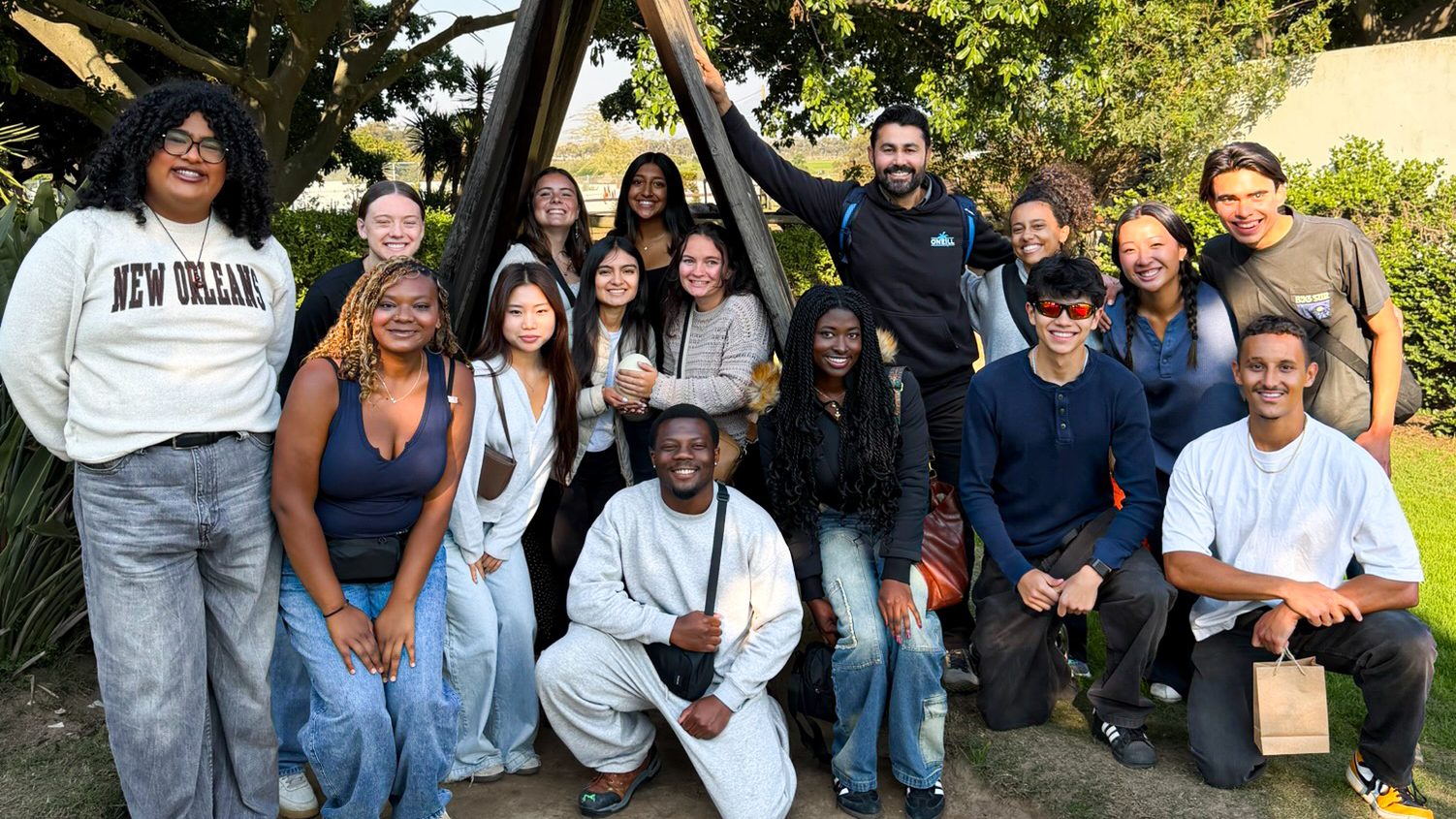
Cal Polyʼs Alternative Breaks students, including Onuwaje (center), at the Cape Ostrich Ranch in Cape Town, South Africa.
Author Dede Onuwaje earned the Black Student Success Initiative’s Experiential Learning Scholarship through Cal Poly’s International Center to support her journey on this Alternative Breaks trip. She served as the group’s documentarian, responsible for capturing key learning experiences and relaying lessons learned back to campus.
In June, 16 students went on an Alternative Breaks service trip to Cape Town, South Africa. Alternative Breaks, a program established within Cal Poly’s Center for Service in Action in 2006 after Hurricane Katrina, is known for creating meaningful travel experiences in which students grow through international and domestic service-learning experiences.
The team was hosted by Film School Africa (FSA), a film school that is dedicated to helping students flourish in the nation’s growing film industry.
“Our goal is very simple: come alongside a community of people in solidarity to work on their community needs and to understand how they experience daily life,” said Bradley Kyker, assistant director for the Center for Service in Action. He said 600 students have taken Alternative Breaks trips in the last 20 years. “We do a lot of intentional pre-departure work with our teams to avoid voluntourism, white savior complex, and other misguided and colonialist notions when serving in the developing world.”
Cal Poly students worked alongside FSA students to complete renovations at its Cape Town campus and at a local preschool, building on the progress made during the program’s three previous visits to the region. Students took part in a range of service projects — including painting, building furniture, landscaping and caring for children — while forming strong connections with one another. Though these tasks were initially assigned based on each person’s interests and experiences, many students found themselves stepping outside their comfort zones.
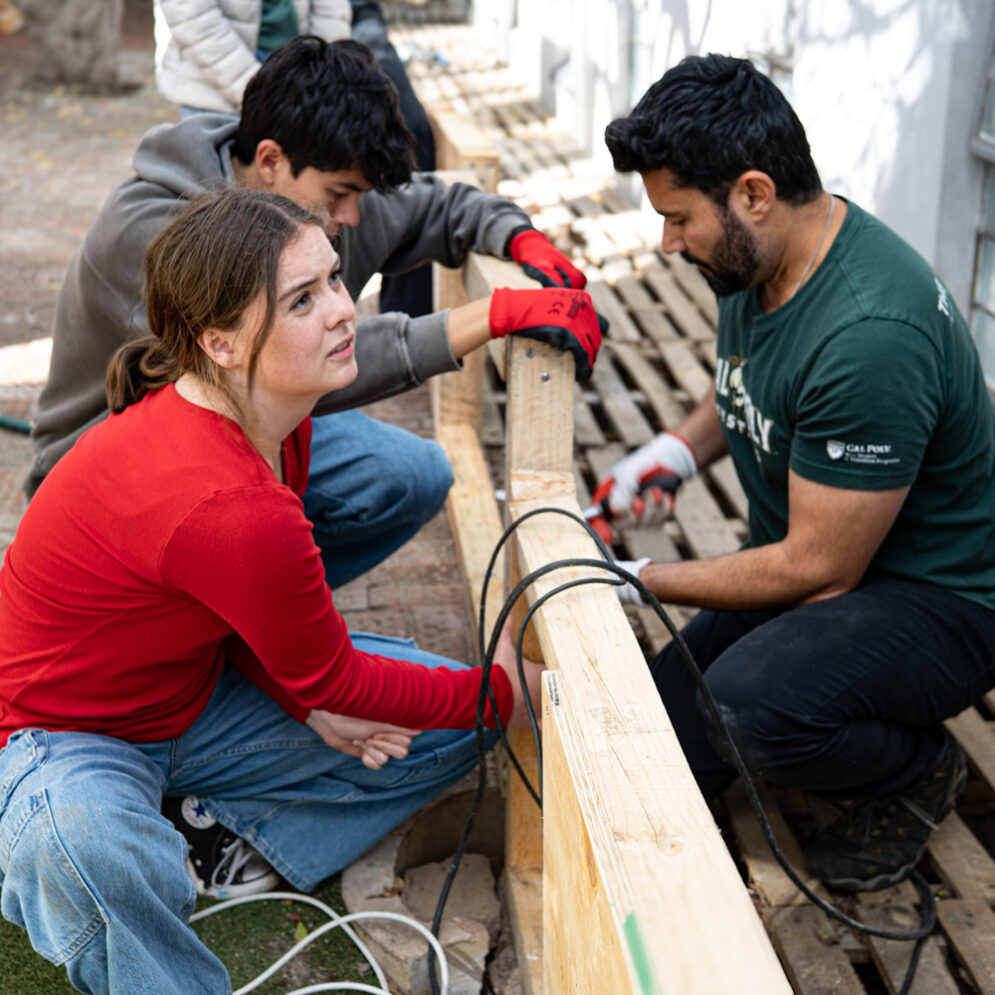
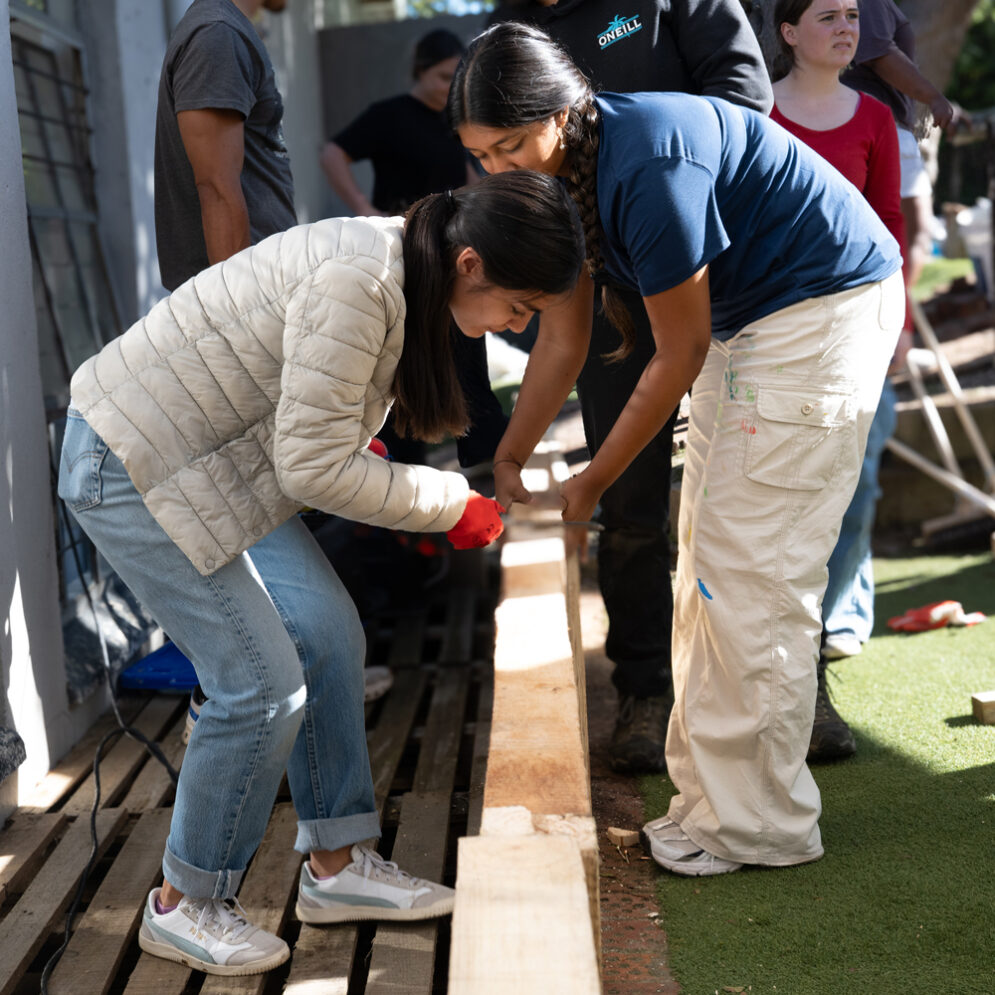
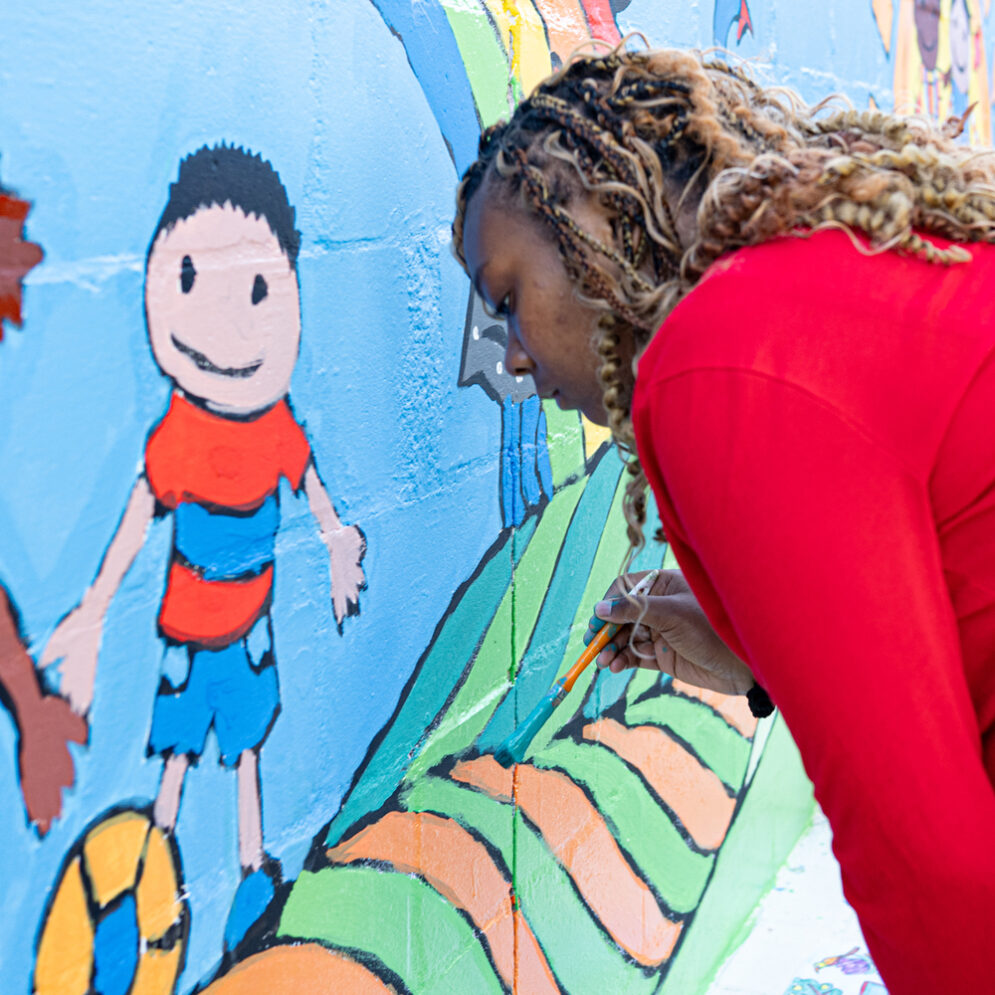
First photo: Isabella Wyrick (left), Aaron Zaugra and Reed Ahmad (right) build a retaining wall at Op Die Plaas Preschool in Stellenbosch, South Africa. Second photo: Julie Cardenas (left) and Aarya Siddiqui continue work on the preschoolʼs retaining wall. Third photo: Alexis Mcconico paints a mural on the preschoolʼs wall.
Although the service days often stretched from morning until late afternoon, the students’ commitment to the work and the people they worked alongside made the time pass quickly. Fourth-year communication studies student Nehemiah Tshishimbi described his experience as “refreshing.”
“Everyone was just so amazing, so nice, had such a humble and serving heart, and they were just so hard-working,” he said. “Truly lifelong friendships have been formed.”
Some of the Cal Poly students had taken part in service trips or had completed community service before. Many participants encouraged students who were considering participating in an Alternative Breaks trip to apply, emphasizing the appreciation it gives for service and the lasting relationships they built with one another.
“I think seeing all those different paths to the same place and the way we were able to work together was really inspiring,” said Elijah Zuniga, an economics student who graduated just before the trip began.
Cal Poly students also visited historical sites such as Robben Island, the District Six Museum, and Bo-Kaap, where they gained a deeper understanding of the cultural and political context that has shaped South Africa.
Second-year history student Isabella Wyrick learned about Alternative Breaks when trying to find a more affordable experience than studying abroad. “I just thought this was a great alternative that also involves helping other people in a different community and getting to experience another culture.”
Everyone was just so amazing, so nice, had such a humble and serving heart, and they were just so hard-working. Truly lifelong friendships have been formed.
Nehemiah Tshishimbi, communication studies student
In addition to their service, Cal Poly and FSA students formed several groups and developed creative projects to reflect on their shared experiences and identities. Some groups performed skits, others read poetry, and one group created a painting to reflect seasonal changes in life. This activity allowed students to engage with one another more deeply as they connected over their families, values, and challenges they had faced.
Julie Cardenas, a graduate student in Cal Poly’s Higher Education Counseling and Student Affairs program, said the combination of service and cultural immersion was “transformational.”
Program leaders say Cardenas’ comment is common among students returning home. Though this isn’t an academically driven trip, many Mustangs say Alternative Breaks became the highlight of their years at Cal Poly — and their résumés.
“Alternative Breaks service trips afford students an opportunity to develop their intercultural intelligence through culturally immersive, service-learning experiences that allow them to work with people who have very different lived experiences, values, and perspectives than theirs,” said Kyker. “These are skill sets hard to come by and highly sought after by employers who hire our graduates.”
Your Next Read

An introduction to Cal Poly Maritime Academy: maritime vocabulary, a Q&A with the commander of the Corps of Cadets, a summertime voyage, and the difference between boats and ships.
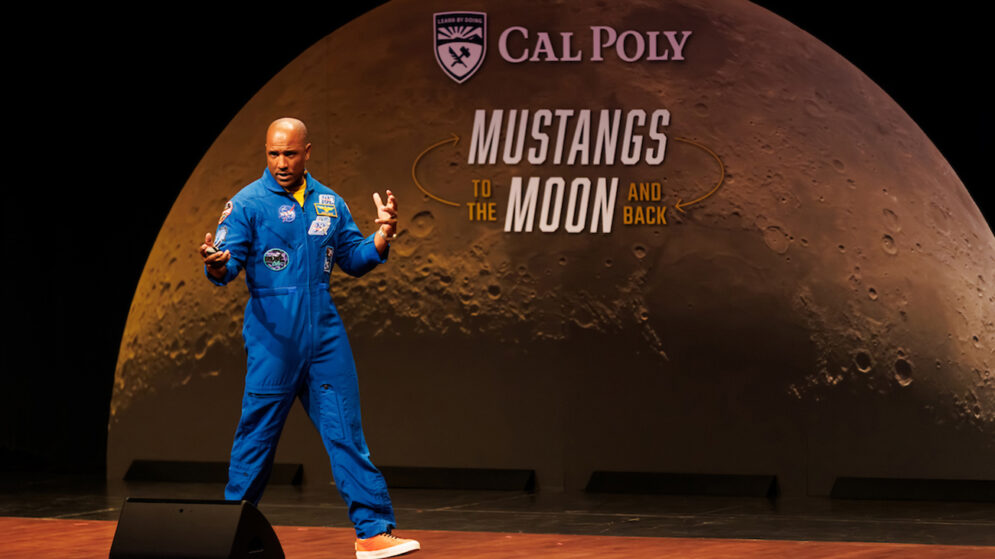
Following his historic lunar mission, NASA astronaut Victor Glover returned to campus for a speaking engagement — and a new leadership role.