A unique biology field course gave students a chance to take a deep dive into California’s vibrant ecosystems.
By Larry Peña // Photos by Joe Johnston
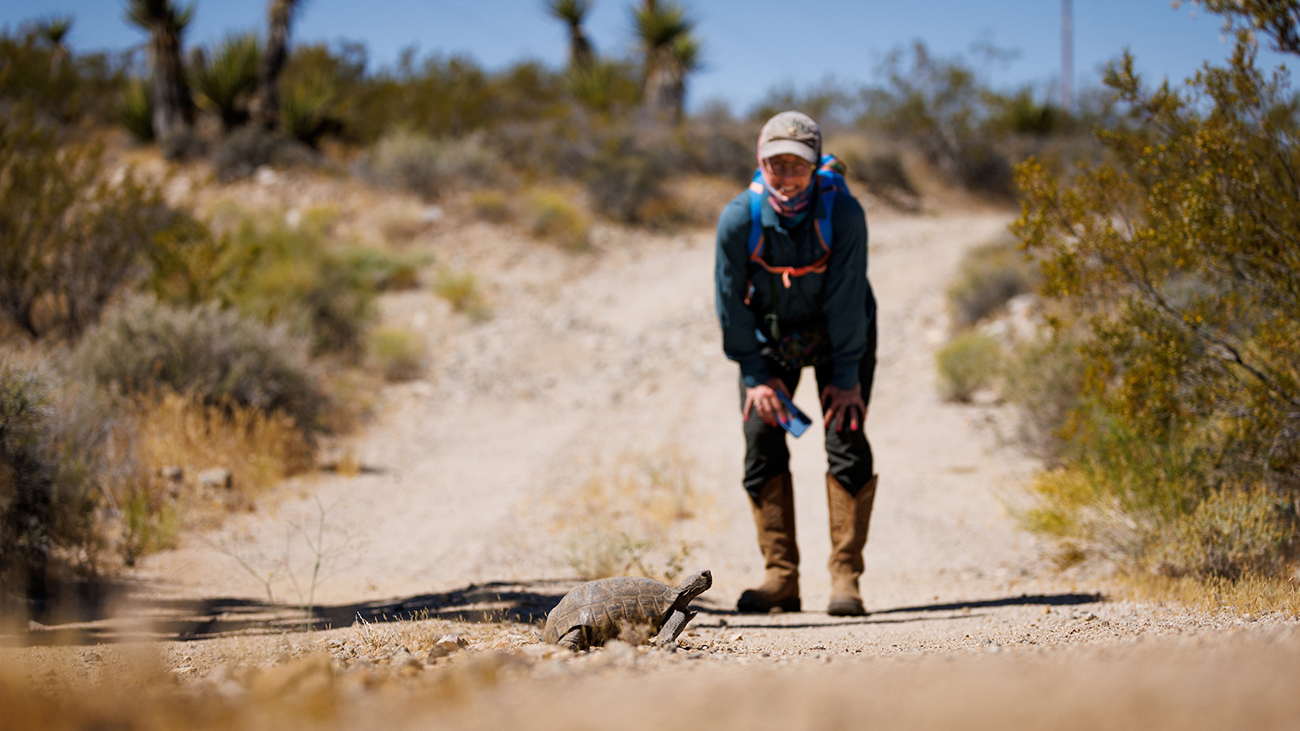
Biological sciences professor Emily Taylor meets a desert tortoise. CDFW Permit: S-192880002-19311-001-03; Mojave National Preserve Permit: MOJA-2026-SCI-0019
Over 10 days last spring, a group of 34 biological sciences students put their field skills to work on an excursion across the Mojave and Colorado Deserts of Southern California.
“We live in a hyper-diverse area of California, and we can access so many different habitats close to campus,” said professor Clinton Francis, who studies ecosystems and avian biology. “Thatʼs wonderful, but it doesn’t capture the full diversity that you might see if you go farther afield.”
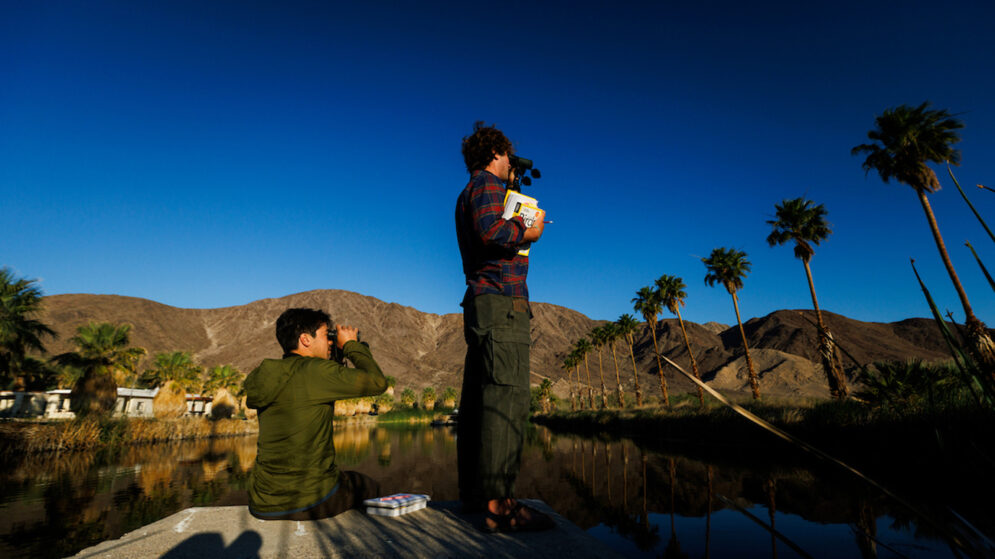
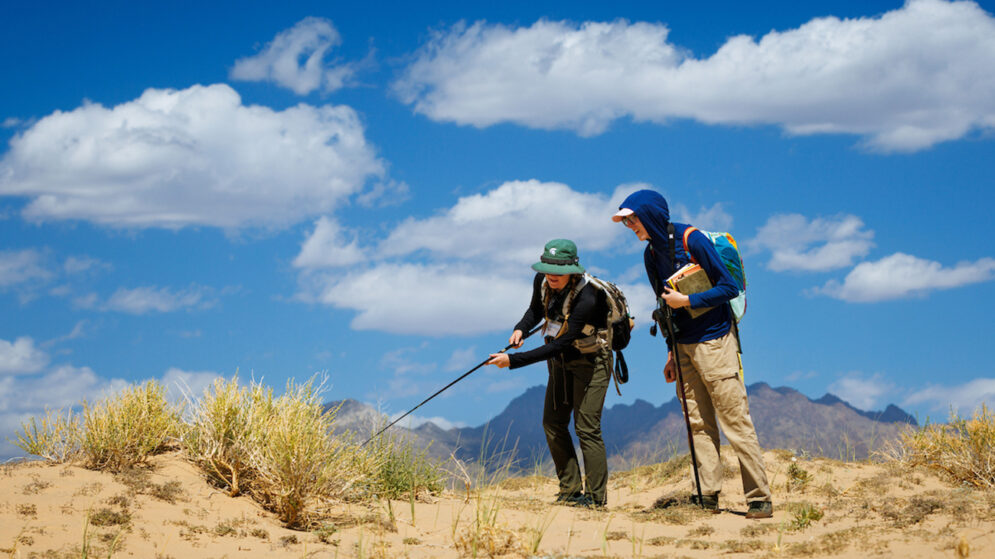
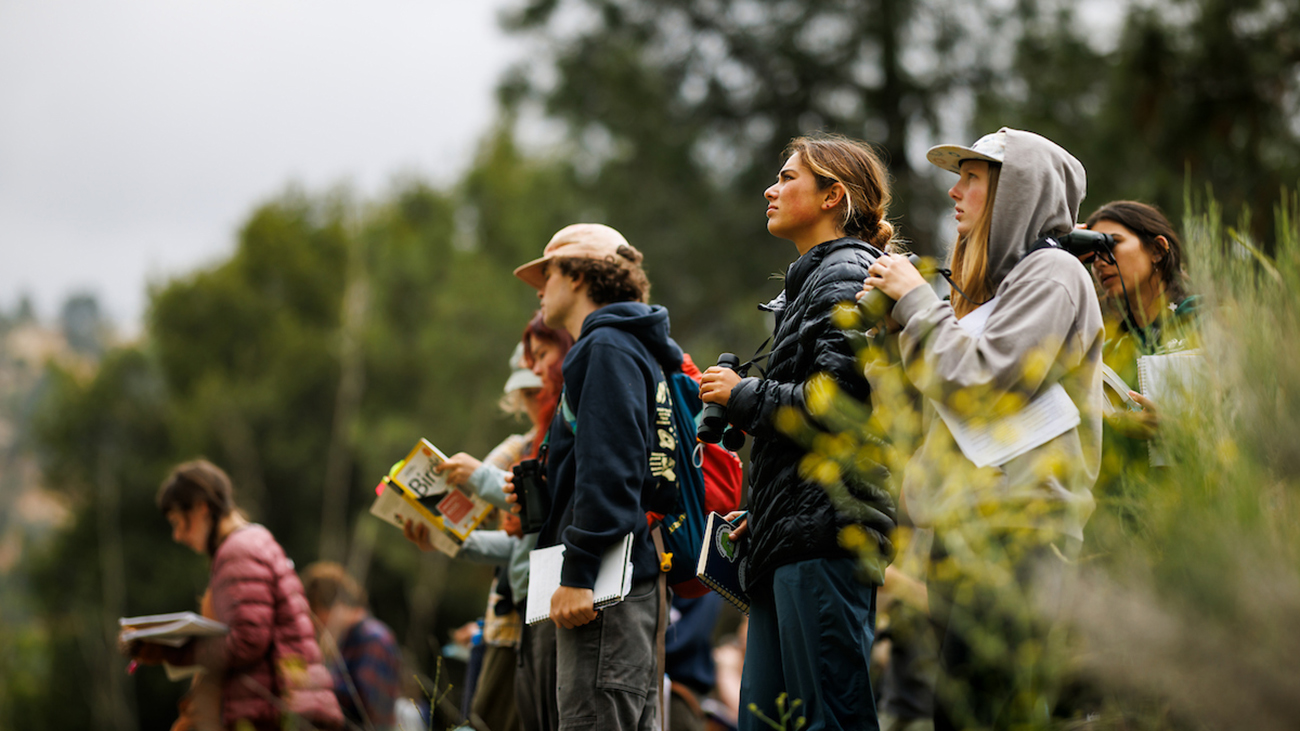
First photo: Students watch for birds at the CSU Desert Studies Center in Zzyzx, Calif. Second photo: Students use a lizard lasso to capture a reptile specimen at Kelso Dunes. Third photo: Students look for birds among a stand of trees in the foothills of the Tehachapi Mountains. CDFW Permit: S-192880002-19311-001-03; Mojave National Preserve Permit: MOJA-2026-SCI-0019
The trip was one of four excursions across the state as part of a novel course for upper-division students, exposing them to in-depth fieldwork across a variety of the state’s rich biomes. Other trips in the course explored the North Coast, the Sierras and eastern San Luis Obispo County.
“Cal Poly students are often very attractive to employers because they get hands-on experience, and thereʼs nothing more hands-on than this,” said professor Emily Taylor, who studies reptiles. “Students learned about survey techniques for the different specimens they encountered. Each one of these species has their own way of life, and you really need to learn about it — not just in a book, but to experience it.”
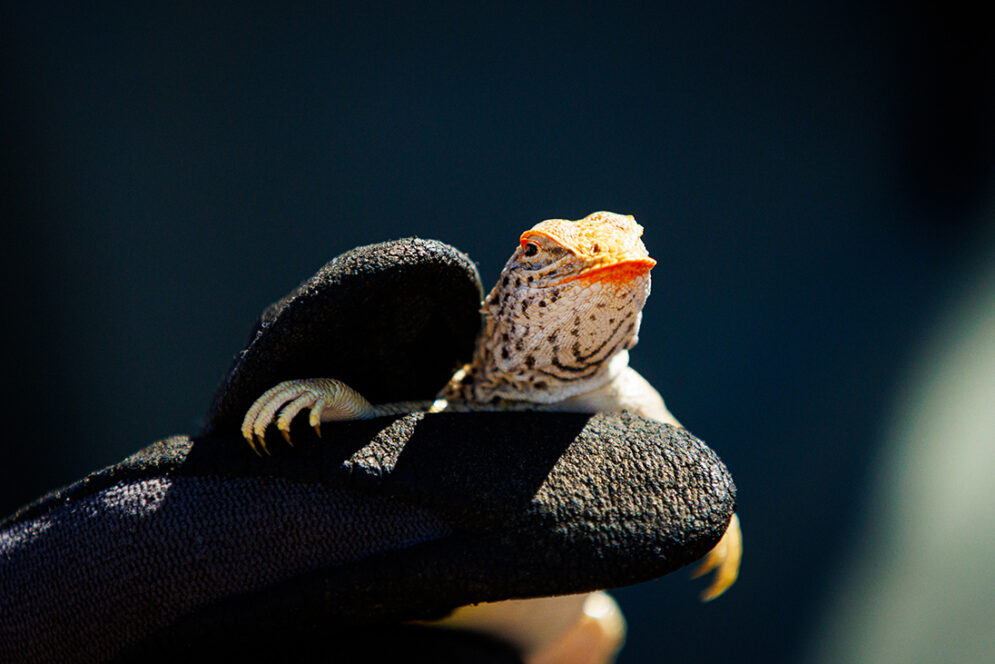
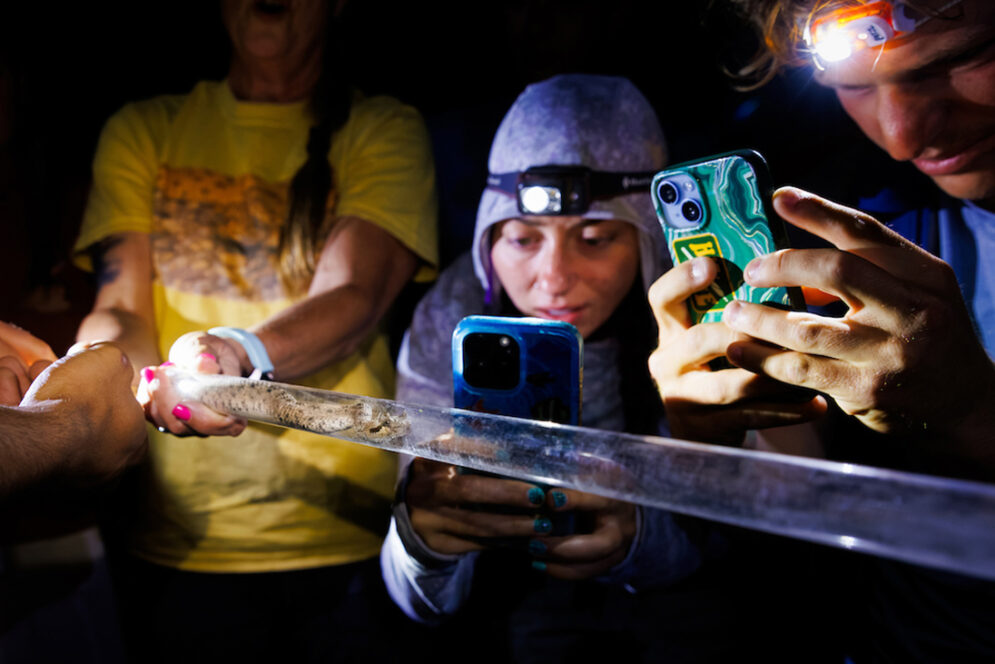
First photo: A Mojave fringe-toed lizard shows off its striking facial coloration. Second photo: Students get an up-close look at a sidewinder rattlesnake.
Francis and Taylor co-taught the course alongside botany professors Matt Ritter and Jenn Yost — the first time all three disciplines had come together in a single field course. The cross-disciplinary perspectives were crucial in giving students a multidimensional view of each ecosystem.
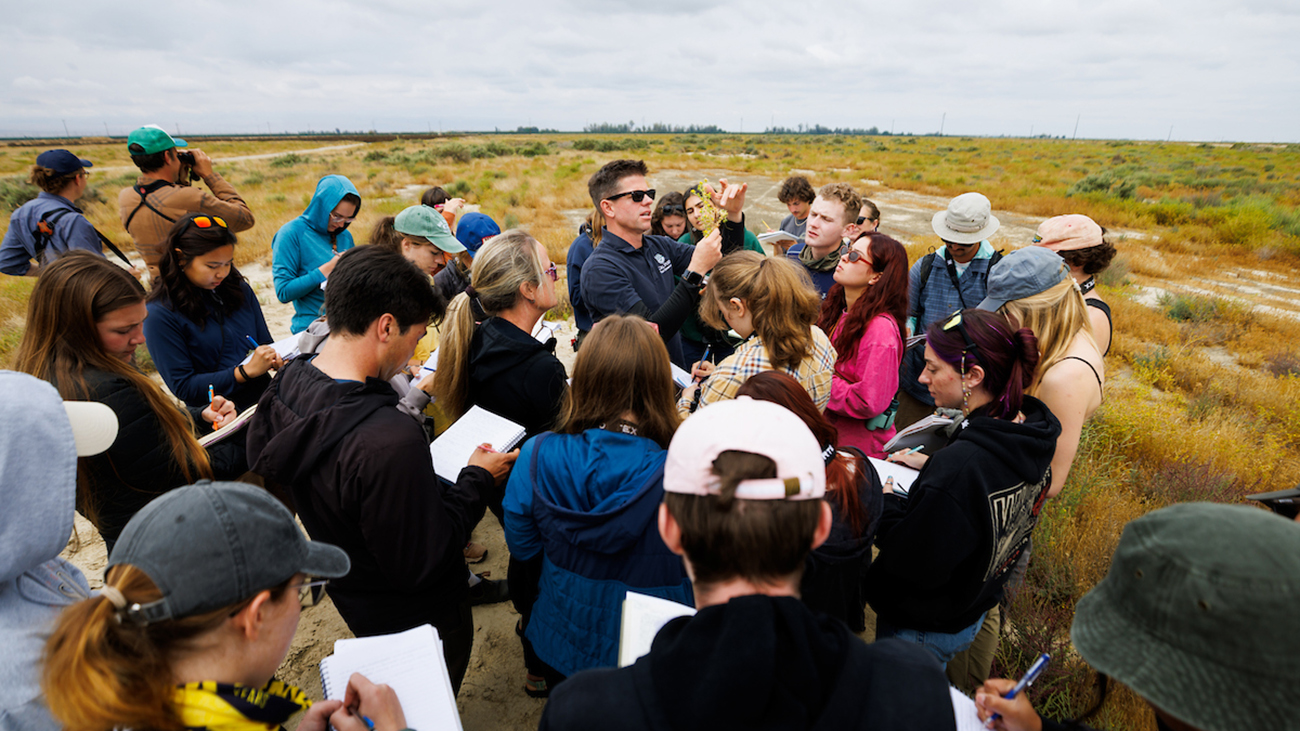
Professor Matt Ritter (center) shows off a native tar plant at the Buttonwillow Ecological Reserve in the southern San Joaquin Valley.
“You could go on a hike in some of the most beautiful places on Earth, and if youʼre taking notes and observing things, you can learn things on your own,” says biological sciences senior Grace CadwalladerOlsker. “But there is something different about making those observations and then having an expert with you that you can ask, ‘Why is that?’ You just learn so much more.”
This distinctive course was supported by a grant from the Bailey College of Science and Mathematics, with additional support from donors to help cover faculty time and travel expenses.